
Fragrant plants for your Valentine
Valentine’s Day is usually associated with bunches of short-lived flowers that seldom last more than a week. How much better it would be to give your Valentine a perfumed plant for the garden. And you don’t have to restrict your choice to flowering plants: why not think of giving a plant with fragrant – even edible – leaves?
Here are some top Valentine’s suggestions:
- Bunches of roses are very traditional Valentine’s Day gifts, so a potted rose is an obvious suggestion. Ideally, choose a rose that has an appropriate name (e.g. ‘Best Friend’ or ‘Remember Me’) but don’t be too constrained by this. Colour, size and fragrance are the most important.
- Gardenias (pictured) produce masses of fragrant white blooms through summer. They enjoy warm conditions and seem happiest in morning sun with some protection from the hottest part of the day. Cut back hard in late winter and feed regularly with a slow release fertiliser such as Thrive Shake ‘n’ Feed.
- Star jasmine, Trachelospermum jasminoides, is a moderately vigorous climber that can be easily trained into a lollipop standard.
- Lavenders are well suited to cooler climates. Keep them in good health by cutting back lightly after flower flushes to promote new growth. In acid soil areas, give a sprinkling of lime once a year.
- Don’t forget citrus, too. With their scented leaves and perfumed blossoms they’re some of the world’s top fragrant plants. An avid foodie might appreciate a kaffir lime, with leaves that add flavour to Asian dishes.
- Lemon myrtle, Backhousia citriodora, is a delightful tree with lemon-scented leaves that are infused to make a refreshing tea. It will handle light frosts and can be clipped into a low hedge.
- Rosemary, the herb of remembrance, makes an ideal Valentine’s gift. Attach a card explaining the long history of this pungently fragrant herb and the significance of your gift will be magnified.
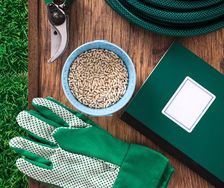
If your Valentine’s gardening skills are limited, don’t present them with a gardening task that could become a potential source of frustration. Include some instructions on growing the plant (a Yates Garden Guide would be a good place to start) and the basics of fertiliser and plant protection. A bottle of liquid plant food such as Yates Nitrosol and, for ornamentals, a Yates Rose Gun, would comprise a basic care kit that would be suitable for even the least experienced of gardeners.
Comments (1)
Add a comment
This area is for general comments from the Yates Garden Club community. Questions posted here will not receive a reply from Yates. For specific product advice Contact Us
pat
Yates site member
09:13, 08 February 2012
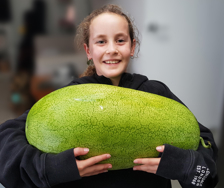
remember I asked you what my vine was that just came up in the garden well there is one pumpkin on it. Started off with yellow balls which were very hard to touch but they just died off and now only one grey pumpkin is there. Please tell me when can I take it off the vine? Thanks Pat
Add your reply