


Tips

Nutrient deficiencies in plants

Azalea Nutrient Deficiency

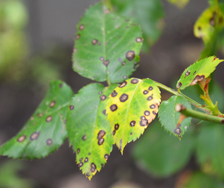
When our plants are looking unhappy, we immediately suspect they’ve been attacked by a pest or disease. It is, of course, important to rule out such problems but, if leaves are discoloured or distorted and you can’t see an obvious cause, it’s also possible that the problem is caused by a nutrient deficiency.

What is a nutrient deficiency?

Plants must be able to obtain about a dozen nutrients that are found in the soil. The three they require in the largest amounts are nitrogen, phosphorus and potassium. Calcium, magnesium and sulfur are needed in slightly lesser quantities and the so-called ‘˜trace elements’(iron, manganese, copper, zinc, boron, molybdenum) in even smaller amounts. But each nutrient is essential and if just one is lacking the plant will grow poorly.

Why do plants suffer from nutrient deficiencies?

Sometimes the soil is poor to start with. Many coastal soils fall into this category and, while the local natives are adapted to these conditions, as soon as you introduce plants with higher nutrient requirements, you’ll have problems.

Pot plants are dependent on the nutrients in the container and it’s easy for these to dissolve and wash away as the pot drains. This is one reason why slow and controlled release fertilisers (as found in Yates Nutricote or Acticote) work so well in pots. As well, most modern potting mixes are made from composted organic matter. This organic matter can continue to break down in the pot and will use up nitrogen as it does so.

The pH (acidity or alkalinity) of the soil can also be a factor. Sometimes, if the pH is wrong for the plant, it isn’t able to take up nutrients from the soil even if the nutrients are in plentiful supply. For example, it’s quite common for plants to show signs of iron deficiency if the pH is too high. If you don’t know the pH level of your soil, it’s worth having it checked.

What to look for?

Unusual pigmentation and poor growth are classic symptoms of many nutrient deficiencies. If the plant is lacking nitrogen, the oldest leaves can turn yellow, drop early or develop reddish tones. Magnesium deficiency, which shows up as yellow patches between the veins, also appears on the oldest leaves. Iron deficiency, by contrast, appears on the newest leaves, with the veins standing out as a distinct green.

How to have healthy plants

In most cases, a suitable all purpose fertiliser will supply the required nutrients. Organic fertilisers like Nature’s Way Bio-Gold and Dynamic Lifter are ideal for slower-growing plants, and the specific variants in the Thrive Granular range are suitable to meet the higher needs of fruit, roses, lawns etc. Fast-growing leafy plants need quick, liquid feeds with something like Thrive All Purpose or Nitrosol. Yates Trace Element Mix can also solve some specific problems.

Plant nutrition is a complex, but fascinating, subject that is explained more fully in the Yates Garden Guide.


Comments (8)

Add a comment


This area is for general comments from the Yates Garden Club community. Questions posted here will not receive a reply from Yates. For specific product advice Contact Us

  • Valerie

    Yates site member

    08:44, 07 July 2010

    Some of our plants could do with some nutrients so will get some from our gardening center.

    Reply

  • Ann

    Yates site member

    09:01, 07 July 2010

    Good old fashioned Epsom Salts will green up citrus that can be lacking in magnesium. Dont forget that all citrus are heavy feeders. Buy the correct fertilizer and reap the benefits later! Plants are like people - they need food!

    Reply

  • margaret

    Yates site member

    10:00, 07 July 2010

    How do I organically improve the boron in my soil? I have been told lack of boron has caused the brown heart in my white stone turnips.

    Reply

  • Mia

    Yates site member

    13:23, 07 July 2010

    Hi, maybe you would know why my lime is looking yellow and not growing well? It is growing in a half wine barrell and I added some horse manure about 4 months ago because I thought it needed some nitrogen, but if anything the oldest leaves are even more yellow now than before! How does that add up?

    Reply

  • Peter

    Yates site member

    15:35, 07 July 2010

    What is the best food for rhubarb??

    Reply

  • Amy

    Yates site member

    17:45, 07 July 2010

    I am wondering about one of my Daphne shrubs - it is also looking yellow and isn't thriving. I applied some epsom salts a few months ago with no improvement. It is three or four years old. Any ideas?

  • gloria helen

    Yates site member

    12:35, 26 April 2011

    my daphne is also the same as yours. i havent tried the epsom salts yet,but am about to. will let you know how i get on.

    Reply

  • Nell

    Yates site member

    14:32, 09 July 2010

    I was wondering about my Harvard Late orange tree which is about three years old. Part of it has turned a bit yellow and I have had to remove one of the branches as it seemed to have some sort of borer in it. The fruit is there but very small compared to my other orange tree.

    Reply

  • Lloyd

    Yates site member

    08:12, 14 July 2010

    I have a lemon tree and a mandarin tree [in separate containers] and feed them both with a handfull of Yates citrus food and a handfull of epsom salts each month. I may miss the odd occassion, but the lemon tree gives us more than the two of us can use and the young mandarin is heading the same way.Plenty of water to run through them[they don't like wet feet] in the summer and kept damp in winter seems to be the answer. Not bad for Central Otago where we experience weeks of hard frosts and sometimes don't see the sun for a week or more.

    Reply

Add your reply

Name
Email

By submitting this comment you will be added to our Garden Club mailing list. You can unsubscribe at any time.

Sign in now