








Yates Dynamic Lifter Organic Plant Food
Releases nutrients slowly, improves the structure and moisture retention of the soil and encourages earthworms and beneficial soil micro-organisms.
Create a Yates account today!
Sign up to join the Yates Garden Club for monthly e-mails packed with seasonal inspiration, tips for success & exclusive promotions.
Plus if you’re a Garden Club member you can take part in the Yates Growing Community - a blog to share successes, get advice & win prizes in fun challenges along the way!

Enter the email address associated with your account, and we'll email you a new password.
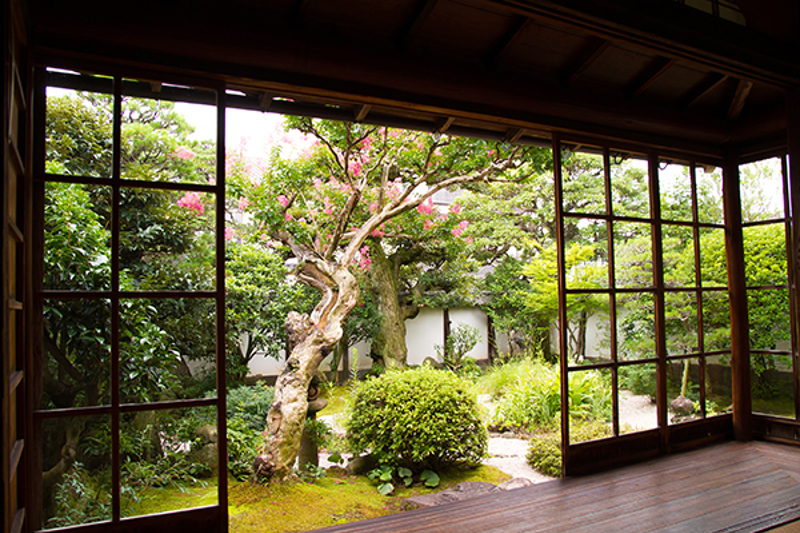
Traditional Japanese garden design is rooted in centuries of aesthetic philosophy, spiritual practice, and a deep reverence for nature.
Most historic Western garden styles lean into geometric structure, floral colour and abundant, varied plantings, but the Japanese garden tradition is more naturalistic and understated. Despite being meticulously arranged, Japanese gardens are intended to feel completely natural.
These gardens embody the Zen Buddhist philosophy of wabi sabi, which embraces humble simplicity, sees beauty in weather-beaten age and imperfection, and celebrates the transient effects of the seasons. Underpinned by wabi sabi, the main purpose of traditional Japanese gardens is to create an environment of calm and contemplation, that allows a garden to be deeply experienced. This is why they'll often have a carefully placed bench: to sit, slow down and soak up the garden.
While their origins are distinctly Japanese, the core principles translate surprisingly well to contemporary New Zealand gardens, so these gardens are a valuable source of inspiration!
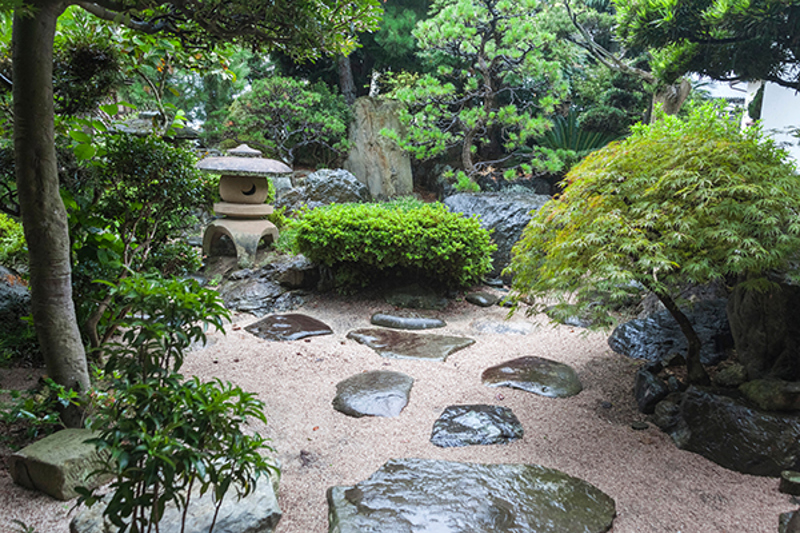
At the heart of Japanese garden design is shizen, the idea that a garden should feel natural, not artificial. Rocks, water, plants, and paths are arranged as though they’ve always been there. This aligns neatly with NZ values that celebrate our landscape: bush settings, coastal landforms and alpine scenery. Instead of enforcing symmetry or rigid lines, the shizen approach allows already-existing land contours, trees, or views to guide the garden layout.
A practical NZ design application is leaving mature trees in place and incorporating them into your garden plan. For example, you’d shape paths around old growth pōhutukawa rather than removing them: a sea view glimpsed through branches is arguably more beautiful than a wide-open vista. Another simple approach is choosing only locally-sourced rock for landscaping, or including some familiar neighbourhood natives in your planting plan - to dial up your garden’s regional character and 'sense of place'.
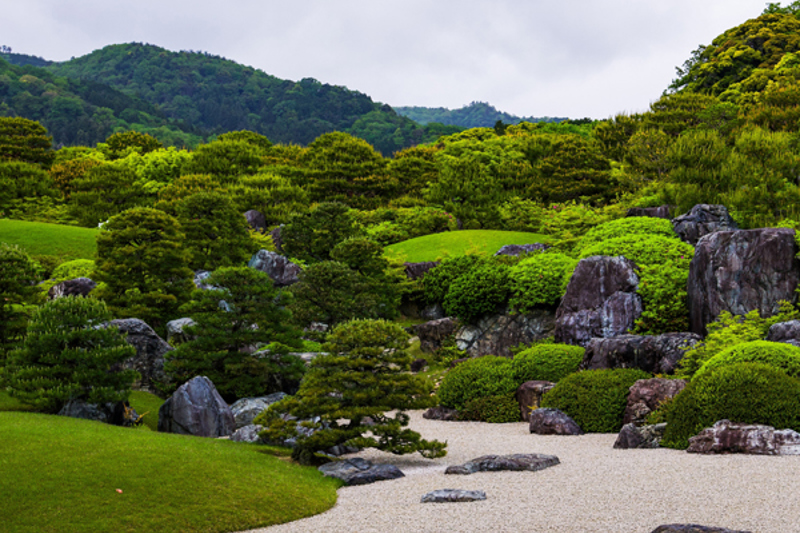
Another key concept in traditional Japanese gardens is shakkei, or ‘borrowed scenery’, which adapts especially well to NZ gardens.
Shakkei is an ancient technique that incorporates elements outside the garden boundary into the design; a garden might have a good view of a neighbouring tree, or a distant range of hills, that are treated as design elements. This trick can make a garden feel bigger, or more seamlessly connected to the surrounding landscape.
In a NZ context, applying shakkei might mean leaving a gap in your planting to frame a beautiful tree across the street, or carefully planning the mature height of your plants to avoid blocking the view of a bush-covered ridgeline. Maintaining hedging at a low height is an easy method to ‘borrow’ views of the landscape beyond your property-line.
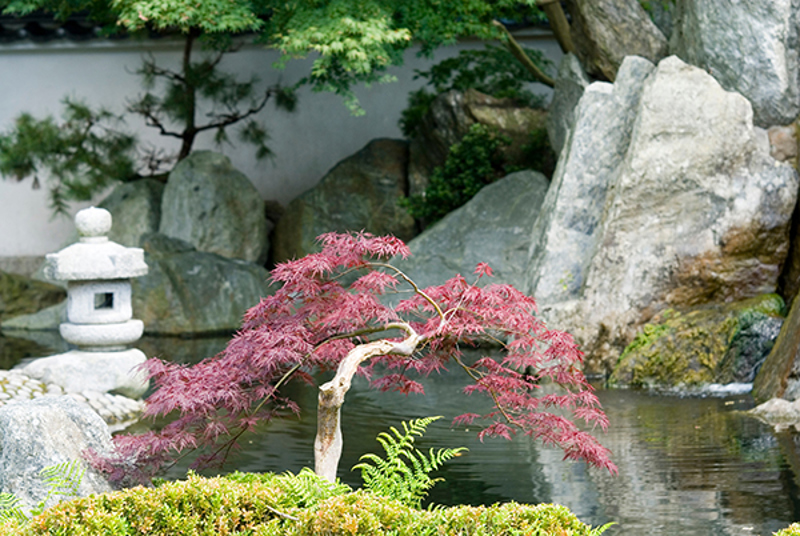
Japanese gardens generally don’t use symmetry, or have geometrical layouts. Instead, they use a principle called fukinsei to create ‘balanced asymmetry’, or ‘intentional irregularity’. This is applied by carefully placing different elements (e.g. rocks vs. plants vs. water) in uneven positions, with intent to create visual harmony across the wider garden. It might seem strange that an off-centred composition of completely different things can feel balanced and stable, but the key is balancing the visual weight of the elements. Larger elements, like rocks, have a heavier visual weight, but you can position smaller elements, like delicate plants, to contrast and counterbalance them. It would be fair to summarise fukinsei as “everything looks better as a group when it’s a bit askew, not lined up in a row”.
Traditional Japanese gardens tend to place rocks or lanterns in groups of three or five, avoiding matching pairs. You'll often see a large dominant rock, grouped with a medium-sized rock and a small rock. Using odd numbers and varying sizes is an age-old trick to sidestep mirror-image design (ask any Florist, they're sure to agree).
In a NZ garden, you can bring different visual elements together into a pleasing, cohesive whole with some simple techniques:
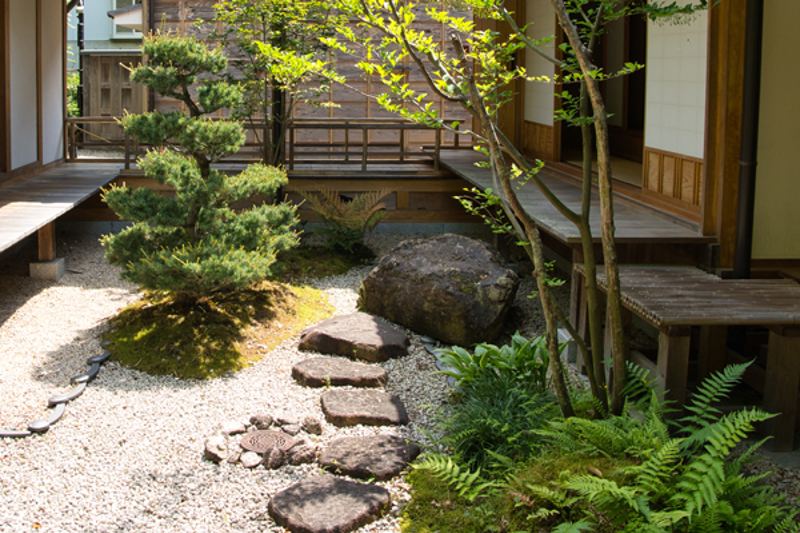
Minimalism is central to Japanese gardens, enabled by the concept of ma, often described as “intentional space” or “emptiness”. The idea is that every garden element serves a purpose - the empty spaces between rocks, plants, or structures become just as important as the elements themselves. Consciously contrasting physical elements against empty space allows a garden to look balanced, but maintains simplicity.
Even a tiny tsubo-niwa (traditionally a 3m2 inner courtyard garden) doesn’t have much packed into it; it might have a single tree, with some rocks and a few low plants at the base. Even in these mini-gardens, ma is often applied by leaving open space, like an area of pebbles, or an unplanted corner that allows the eye to rest.
Japanese gardens do include decorative elements, like stone lanterns, but they're invariably very simple. These gardens rely on natural textures instead of surface decoration, so sculptural objects tend to be rough-hewn - they also serve a purpose as perches for moss to grow!
In contemporary NZ gardens it can be tempting to over-plant or add lots of features that overwhelm the space. Applying ma might involve limiting your plant choice to a few main species, then giving them enough space to shine. Hard landscape elements like stone paths, timber decks, or water features can be kept simple, chosen for their material or surface texture, then thoughtfully placed to unify the garden.
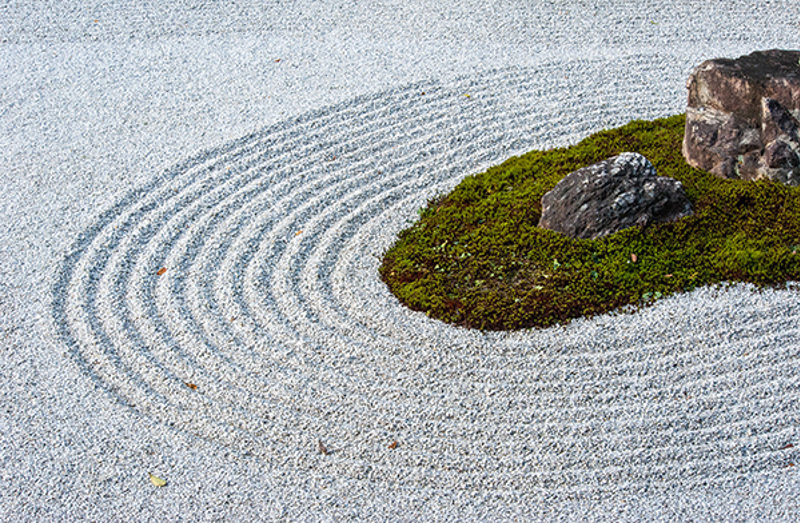
Traditional Japanese gardens often use symbolic elements: rocks to represent mountains, or raked gravel for water, with mossy mounds to suggest the passage of time.
While this specific symbolism might not resonate with all NZ gardeners, the underlying idea still works in NZ. For example, a shallow ceramic water basin with a beautiful deep glaze can bring the feeling of a nearby river or sea into your garden. Using evocative materials and subtle references allows you to add highly personal symbolic meaning and significance into your garden.
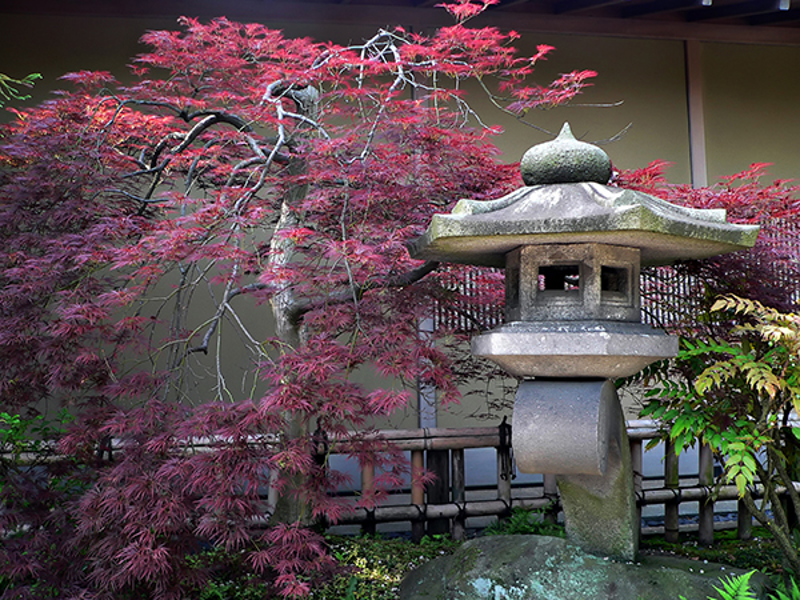
Classical Japanese gardens are designed to highlight the passage of time: spring cherry blossom is followed by lush green summer foliage, then vibrant autumn reds and golds, with winter-bare trees becoming sculptural design elements.
Our climate is generally milder and most of our native trees are evergreen, but you can still have seasonal contrast by choosing flowering native plants or shrubs, foliage that changes colour seasonally, or by incorporating a few deciduous trees amongst natives. In urban gardens, deciduous trees offer the bonus of winter sunlight into your outdoor living space!
By thoughtfully combining Japanese principles with local plants, materials, and climate, NZ gardeners can create spaces that feel tranquil, grounded, and deeply connected to their surroundings - timeless gardens designed not just to be looked at, but to be experienced.


Share
Share this article on social media