



Yates Zero Tough Heavy Duty Weedkiller - Ready to Use
Extremely effective at controlling the toughest, hard-to-kill and invasive weeds and grasses (such as ivy, gorse & bamboo) - roots and all.
Create a Yates account today!
Sign up to join the Yates Garden Club for monthly e-mails packed with seasonal inspiration, tips for success & exclusive promotions.
Plus if you’re a Garden Club member you can take part in the Yates Growing Community - a blog to share successes, get advice & win prizes in fun challenges along the way!

Enter the email address associated with your account, and we'll email you a new password.
Convolvulaceae
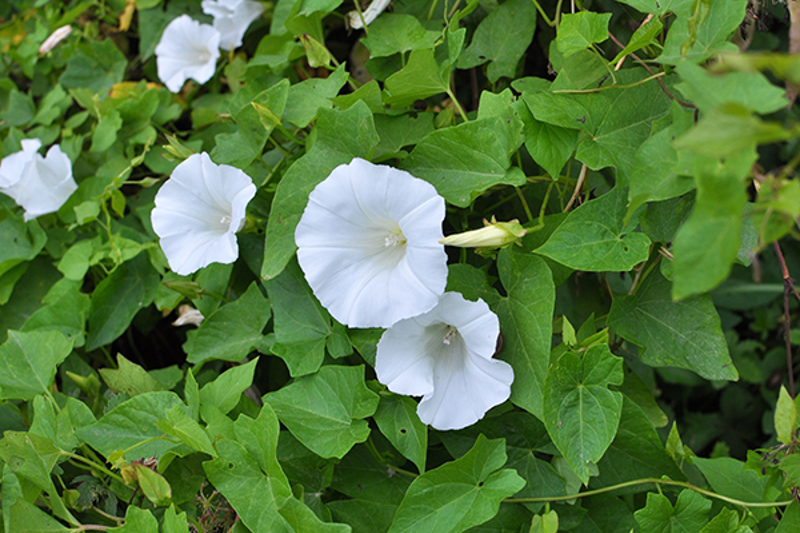
Great Bindweed (Calystegia silvatica)
Bindweeds and convolvulus are a group of related vine species in the Convolvulaceae family, that share a similar climbing, creeping habit and trumpet-shaped flowers. Their vines aggressively scramble up and over other plants, forming a dense mass of twisted stems that can smother and kill plants underneath. They have heart-shaped or arrowhead-shaped leaves, with stems that exude a milky-white latex sap when cut.
This family of plants are deciduous perennials, so the foliage and stems die back during winter frosts. They have deep, tough rhizomatous root systems that allow them to stay dormant through the cold season, then burst into rapid growth in spring.
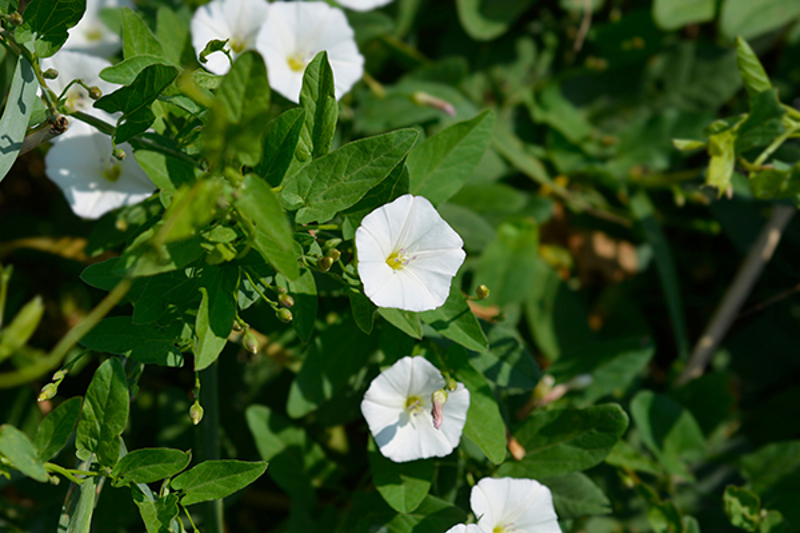
Field Bindweed (Convolvulus arvensis)
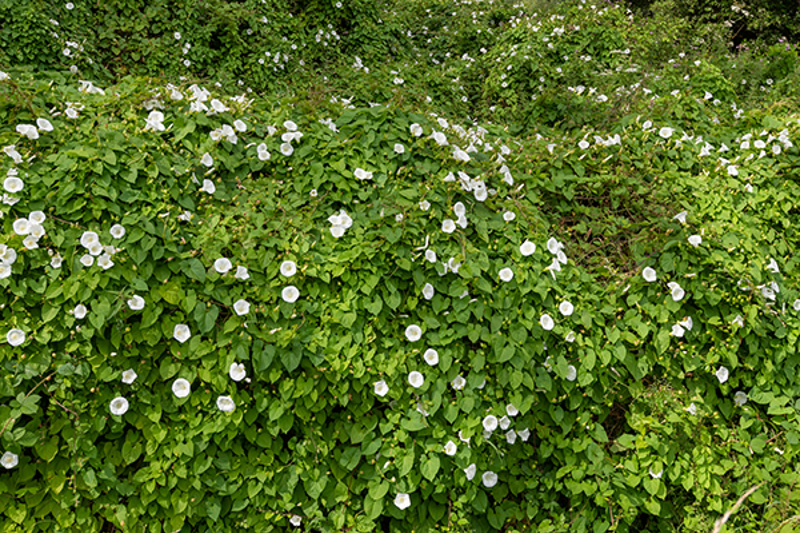
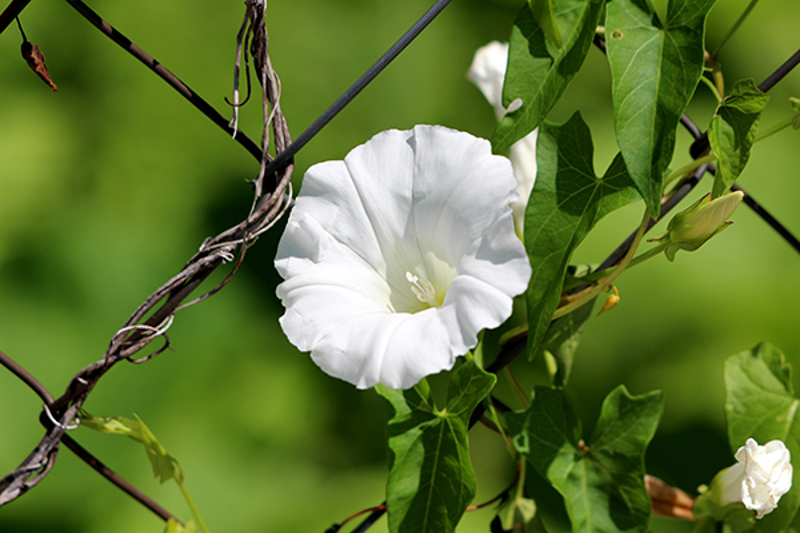
Great Bindweed (Calystegia silvatica) is found throughout NZ. It can climb up to 4m in height, with smooth-textured, green or purple stems that corkscrew into tight twists. Large white trumpet-shaped flowers, up to 9cm in diameter appear from October to May. It has large heart-shaped leaves, up to 18cm long.
Field Bindweed (Convolvulus arvensis) has smaller white or pink-tinged flowers (about 3cm across) and smaller leaves than great bindweed. It flowers from November to March. Leaves and stems are slightly hairy. Field Bindweed is also widespread throughout NZ, particularly in neglected gardens or waste ground.
Convolvulus / Pink Bindweed (Calystegia sepium subsp. roseata) looks very similar to great bindweed but produces pink flowers with white stripes, from early spring through to May. It can become an invasive pest in frost-free regions of the North Island and Upper South Island. In these areas convolvulus often hybridises with great bindweed, to produce plants with pink-tinged white flowers.
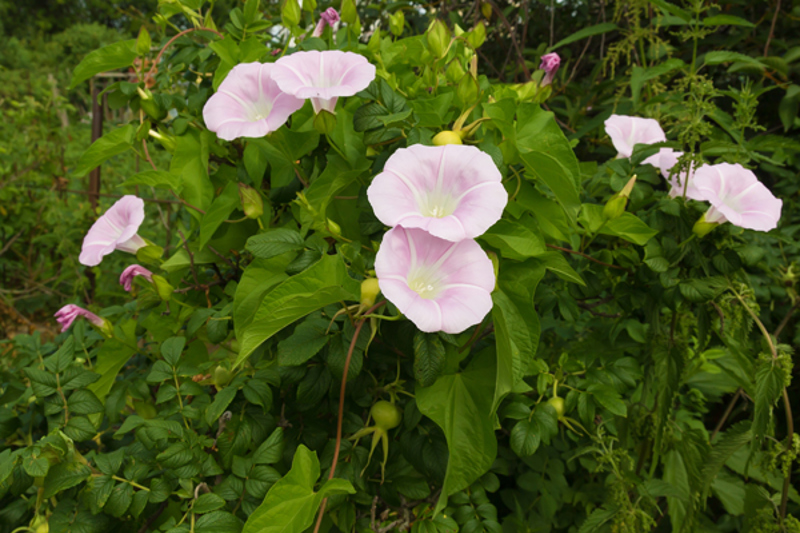
Pink Bindweed (Calystegia sepium subsp. roseata)
Manual control by digging out roots is very difficult, because any tiny scraps of rhizome that get left behind will resprout. Using herbicides to control bindweeds is generally the fastest and easiest control.
For effective results, apply herbicide while the weeds are actively growing. The best timing is to spray in autumn, before the weeds go dormant, then reapply to any new shoots that appear in spring. Multiple sprays might be required to completely kill the hardy root system.
Yates Zero Tough Heavy Duty Weedkiller is extremely effective at controlling bindweeds, roots and all. It's purpose-designed to kill the toughest, most invasive weeds and grasses (like ivy, gorse & bamboo).
Yates Woody Weedkiller concentrate is a great alternative to kill off convolvulus and bindweeds.
When convolvulus or bindweed is climbing on a desirable tree or shrub that you don't want to harm, the easiest control method is to carefully apply Yates Zero Tough Heavy Duty Weedkiller to the leaves and freshly cut stumps with a small brush. Make sure to wear waterproof gloves to do this job safely.


Share
Share this article on social media