Create a Yates account today!
Sign up to join the Yates Garden Club for monthly e-mails packed with seasonal inspiration, tips for success & exclusive promotions.
Plus if you’re a Garden Club member you can take part in the Yates Growing Community - a blog to share successes, get advice & win prizes in fun challenges along the way!
Enter the email address associated with your account, and we'll email you a new password.
Phytophthora spp.
In NZ, a small group of related phytophthora species is responsible for three different citrus problems: citrus root rot, collar rot and brown rot. These widespread diseases are a serious threat to tree health and fruit production.
Phytophthora is a soil-dwelling oomycete (aka water mould), that thrives in wet conditions. These microscopic organisms spread by spores, that can survive in soil for months, waiting for wet weather to trigger them. When conditions become favourable, soil-bound spores can infect the roots of citrus, causing healthy roots to soften, rot and die. This is known as root rot.
When spores are splashed up onto the above-ground parts of citrus trees by raindrops, phytophthora can infect the trunks. This is known as collar rot disease, or gummosis.
When the spores spread upwards to infect citrus fruit and leaves, it’s known as brown rot.
Overwatering or extended periods of wet weather dramatically increase the risk of phytophthora infection. Citrus trees prefer well-drained soil, because waterlogged soil reduces the oxygen available to their roots.

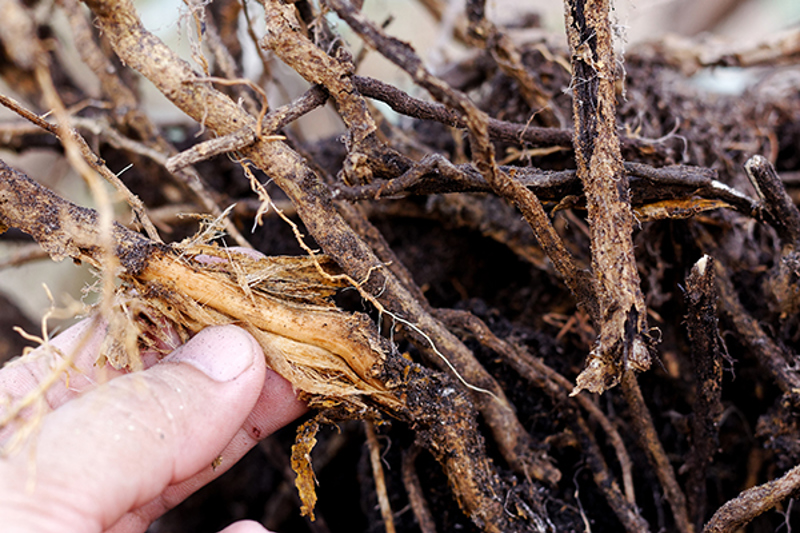
Tree roots damaged by phytophthora infection.
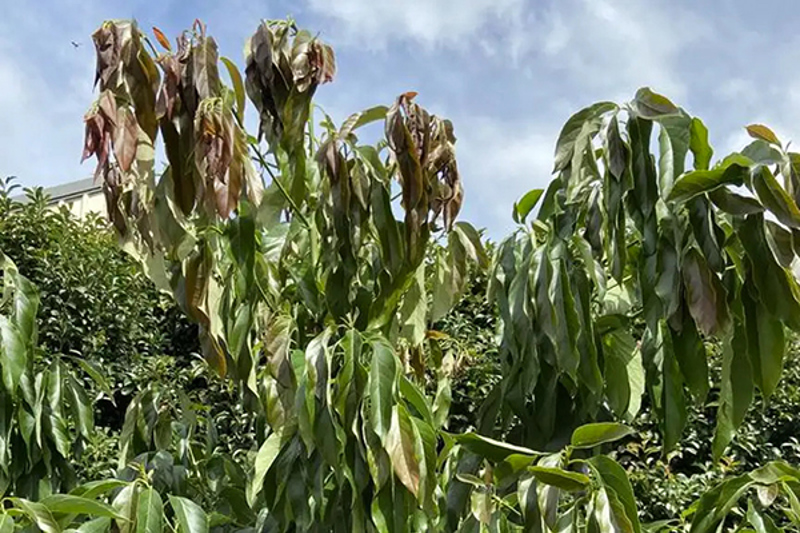
The first telltale symptom of root rot is usually yellowed, wilted and dying foliage. Premature leaf drop is also common. Beneath the soil, the delicate feeder roots are the first to blacken and die off, so they can’t function properly to provide nutrients. As the disease spreads to the larger roots, the tree's canopy growth becomes progressively weaker and spindlier.
The outer layer of bark on infected roots becomes soft and slips off easily when handled.
Root rot seriously degrades plant health and can kill the tree if left untreated.
Root rot symptoms in an avocado tree (image courtesy of Angie Thomas).
Always avoid planting citrus in soggy or flood-prone spots. If you’re stuck with a position that isn’t suitable, consider planting into pots or raised beds. Additionally, improve drainage around your tree in very damp situations.
Citrus often struggles in heavy clay soil that retains water. If you dig a planting hole in heavy clay, there’s a risk that rainwater will collect and sit in the hole, which effectively leaves your tree sitting in a bowl of water. Instead, plant the tree into a broad raised mound of soil, to elevate the roots above ground level.
Avoid overwatering. Apply and maintain a generous layer of bark mulch under the tree (leave a gap between the mulch and the main trunk).
An example of collar rot infection.
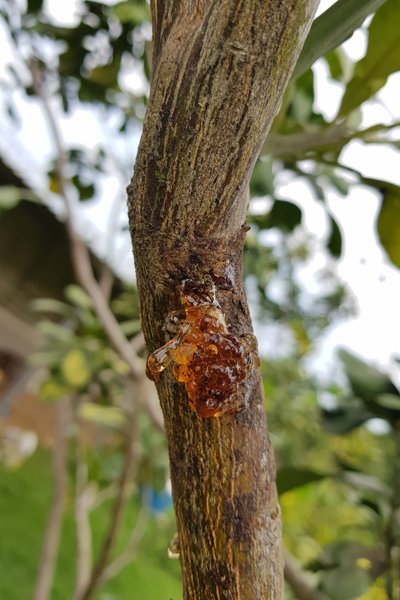
Gum oozing from a collar rot infection site.
Collar Rot usually strikes just above soil level, close to the graft union (the bumpy bit at the base of the trunk, where the tree was grafted onto its root stock).
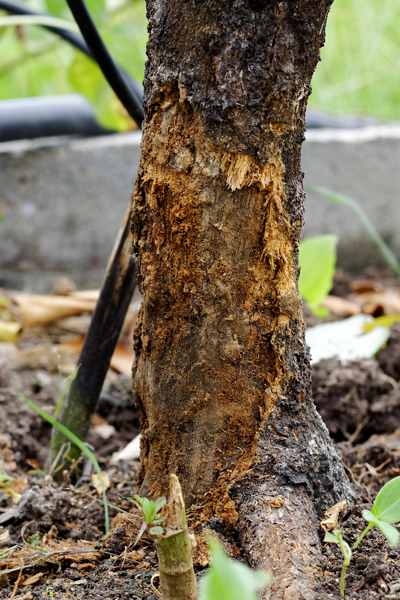
First, a section of bark dies back and falls away from the main trunk. Cracks form around the dead section and oozing gum may be visible. If left unchecked, the damaged section can ringbark the trunk and kill the tree. You may also see yellowing leaves and weak growth.
Lemons are especially vulnerable to citrus collar rot, but it can affect all citrus, especially after heavy rain events.
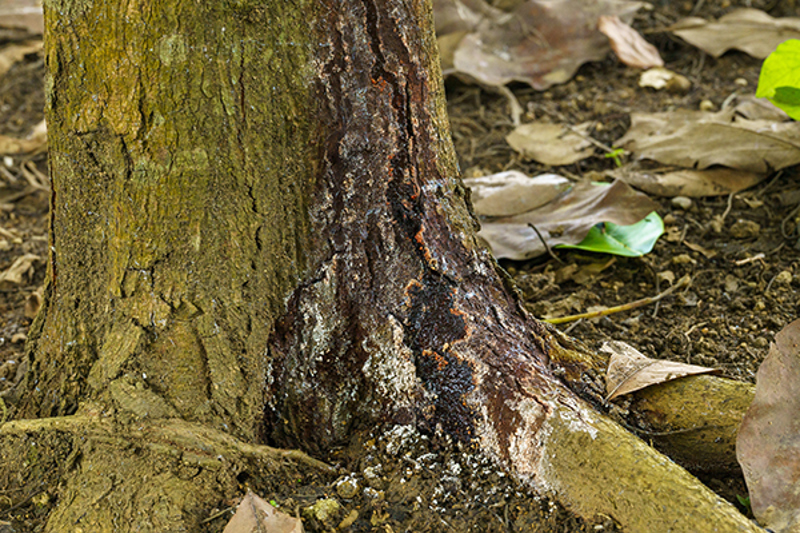
An example of collar rot on an avocado tree.
Cut the dead bark back to healthy tissue, then apply Yates Liquid Copper Fungicide directly to the affected bark lesion. Repeat applications up to a maximum of 5 per season, until natural healing has commenced. If you apply Yates Liquid Copper mixed with water-based paint, one or two treatments per season may be all that’s required.
When planting citrus, make sure the graft union stays well above the soil level. Don’t allow soil or mulch to pile up so it covers the graft union. Make sure mulch doesn’t touch the bark of the tree, always leave a small gap.
Be extra careful with line trimmers around the base of citrus trees, as cuts in the bark are an entry point for infection. Apply Yates PruneTec to seal any accidental injuries.
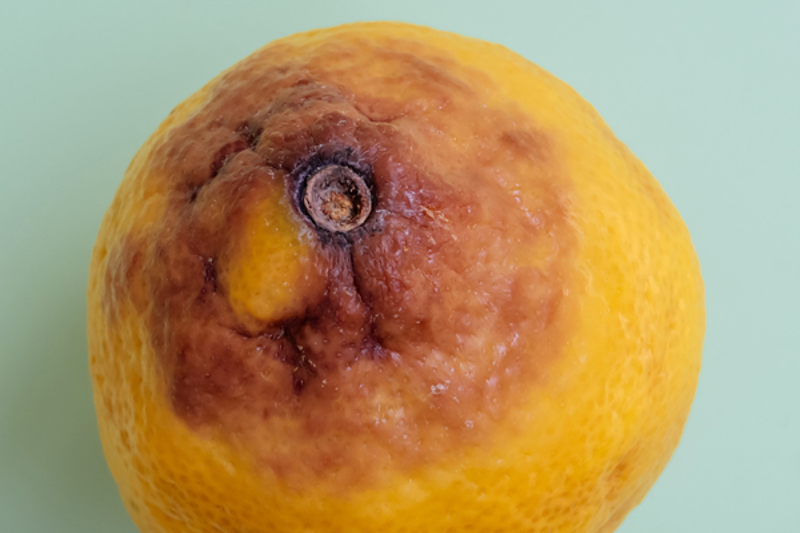
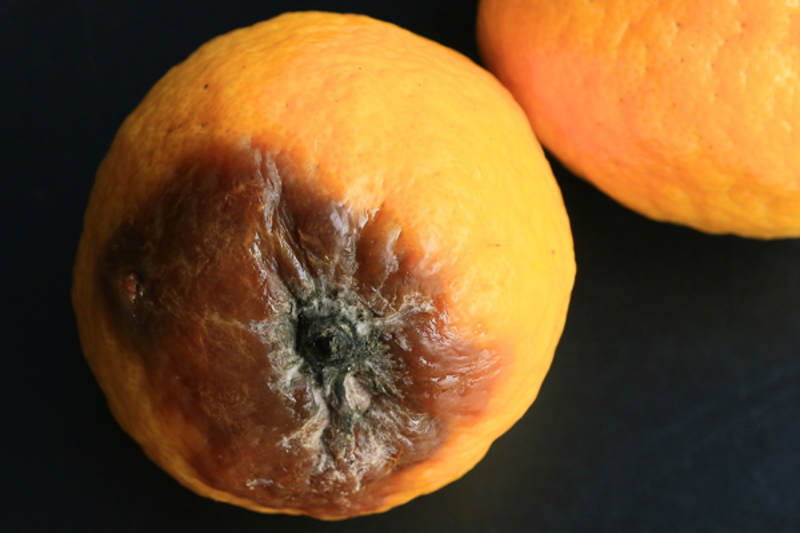
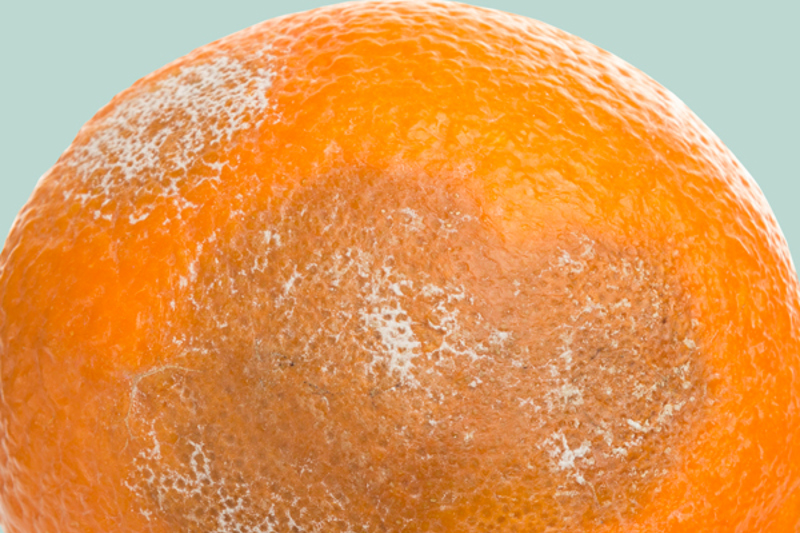
Brown rot symptoms on an orange.
Symptoms appear on mature citrus fruit. The lowest-hanging fruit is usually the worst affected, often dropping off the tree early. Fruit remains firm but quickly develops light-to-dark brown, soggy-looking lesions. Affected fruit has a distinctive sour, rotten smell. In humid weather, a white, fuzzy fungal mycelium sometimes appears on the fruit.
In severe infections, leaves can develop watery brown blotches along the edges.
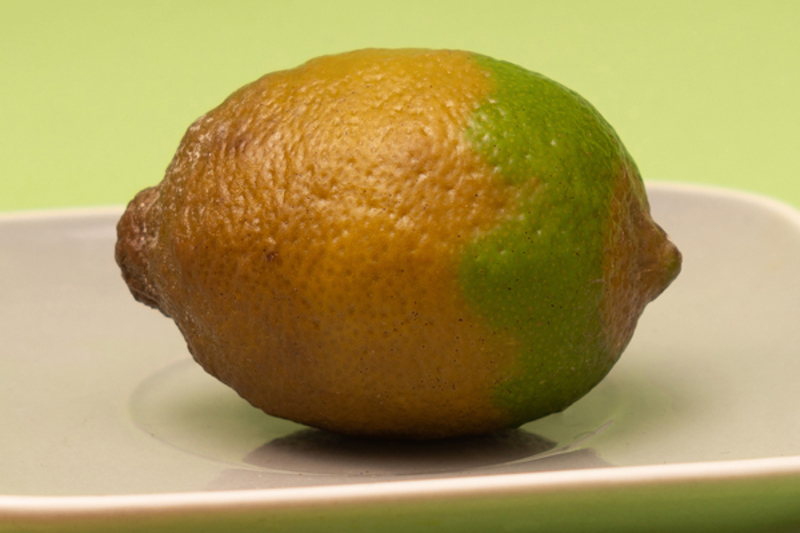
Brown rot symptoms on an unripe lemon.
Prevention is the key to avoid brown rot. Proactively apply Yates Copper Oxychloride after petal fall, then at 3-4 weekly intervals until harvest time. For full protection, aim for complete coverage of all foliage, buds and stems.
Don’t leave fallen fruit on the ground, dispose of it in your household rubbish.
Pruning out the lower branches of the tree helps to improve air circulation and alleviate the disease. Because phytophthora infects plants through fresh wounds, it’s recommended to apply a protective coating of Yates PruneTec to pruning cuts.
Brown rot symptoms on an orange.
Share
Share this article on social media