



Yates Nature's Way Vegie Insect Spray Natrasoap - Ready to Use
A fast acting broad spectrum insecticide based on natural, low toxic and organic ingredients. It controls by contact action.
Create a Yates account today!
Sign up to join the Yates Garden Club for monthly e-mails packed with seasonal inspiration, tips for success & exclusive promotions.
Plus if you’re a Garden Club member you can take part in the Yates Growing Community - a blog to share successes, get advice & win prizes in fun challenges along the way!

Enter the email address associated with your account, and we'll email you a new password.
Eriophyidae
Calacarus carinatus
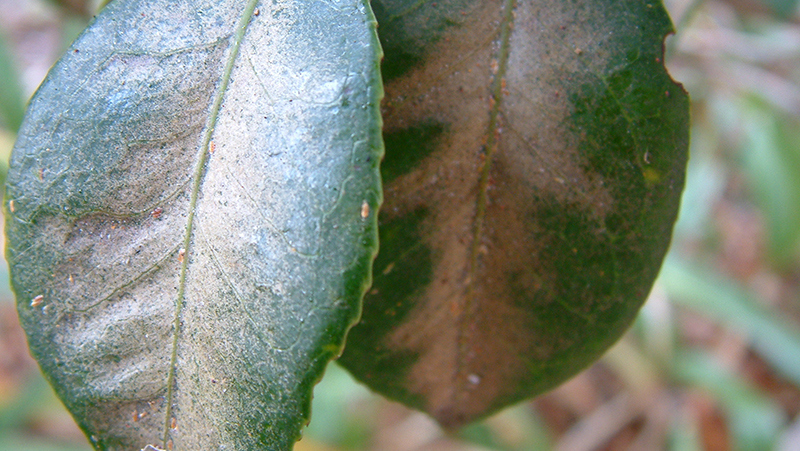
Camellia Tea Mite (AKA purple tea mite or ribbed tea mite) is an introduced pest, first spotted in NZ in 1959.
Technically, mites aren't insects; they're arachnids, so they're related to scorpions, spiders and ticks. Mites are tiny creatures; this species can only be seen with a powerful hand lens or a microscope. Accordingly it's the damage they cause that you'll see. Mites have piercing and sucking mouthparts to feed on leaves.
Mites breed rapidly and infestations may build up quickly.
The effects of camellia tea mite can be spotted when a bronze or purple discolouration develops on the older foliage.
Usually, leaves develop discolouration down the central midrib at first. Left unchecked, bronzing covers the entire leaf, with poor growth and reduced flowering as a result. Camellia Tea Mites occur on both upper and lower surfaces of leaves, and the leaves may have a ‘dusty’ appearance from mites cast-off skins.
When serious infestations occur, leaves may curl, turn brown, dry out and fall off.


Share
Share this article on social media