

Yates Nature's Way Organic Citrus, Vegie & Ornamental Spray
Unique organically certified pyrethrum and plant-based oil combination insecticide, with twin modes of action against garden pests.
Create a Yates account today!
Sign up to join the Yates Garden Club for monthly e-mails packed with seasonal inspiration, tips for success & exclusive promotions.
Plus if you’re a Garden Club member you can take part in the Yates Growing Community - a blog to share successes, get advice & win prizes in fun challenges along the way!

Enter the email address associated with your account, and we'll email you a new password.
Thysanoptera
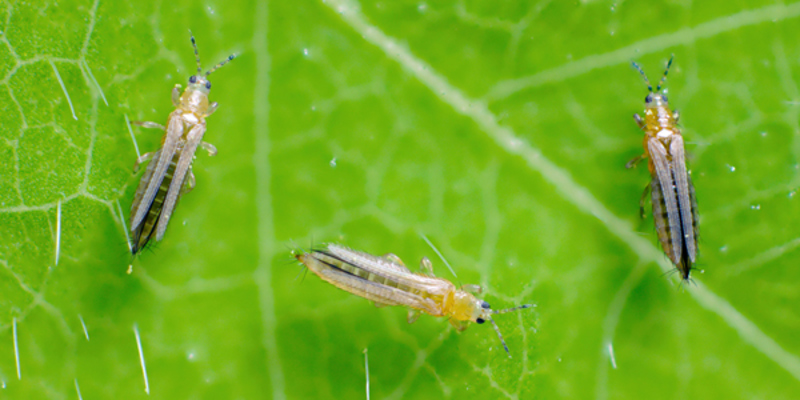
There are 7,400 species of thrips in the world and quite a few are serious pests of plants. The most commonly encountered species in NZ are Greenhouse Thrips (Heliothrips haemorrhoidalis), Western Flower Thrips (Frankliniella occidentalis) and Onion Thrips (Thrips tabaci).
Thrips attack the flowers, fruit and foliage of a wide range of vegetable crops and ornamental plants. Roses, fruit trees, azaleas, gladioli and a variety of vegetables (including tomatoes, onions and beans) all suffer from thrip attacks. They also feed on a wide range of weeds. Pest thrips are 0.5mm – 3mm long, ranging in colour from white through yellow and brown to black.
During hot weather, if host weeds dry up the insects migrate to more attractive plants. Thrips lay eggs inside plant tissue, where their hatched-out nymphs also feed on the plant's sap. Thrips also lay eggs inside unopened flower buds, which makes it difficult for contact insecticides to reach them.
Thrips also have a nasty habit of spreading plant viruses in their saliva while they feed; in NZ they are the cause of tomato spotted wilt virus (TSWV).
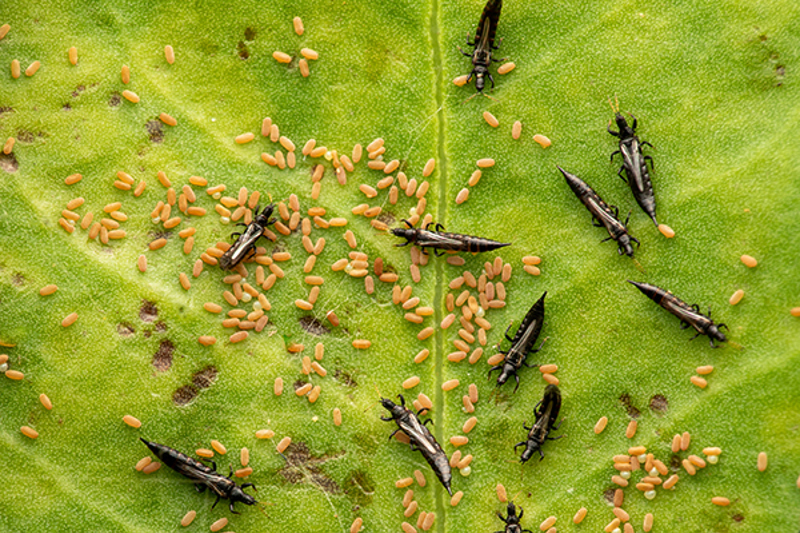
Greenhouse Thrips (Heliothrips haemorrhoidalis)
Thrips scrape the surface of the leaves and petals with their rasping mouthparts, then suck the sap out of the plant cells. The resulting damage leaves a distinctive silvery-white mottled appearance on leaves.
Thrips excrete a waste material called "frass", that looks like tiny black specks on infested leaves or flowers.
Other symptoms are small white flecks on petals, browning on petals and fruit, and flower drop. If left unchecked the leaves, new shoots and flowers will become deformed and stunted. Wilting and browning of foliage can also occur.
Our go-to product to combat thrips is Yates Nature's Way Citrus, Vegie & Ornamental Spray. It's ACVM-registered to control thrips on a wide range of vegetables, fruit trees, ornamentals and indoor plants, BioGro approved as an input for organic gardening, plus it has a convenient 24 withholding period for edible plants.
Control thrips on ornamentals and stonefruit with Yates Mavrik Insect & Mite Spray. Aim for thorough coverage of plant foliage, including the underside of leaves.
For ornamentals and roses, you can choose Yates Super Shield Rose Spray to control thrips.
Remove rocks, pots, pipes or any similar items that provide shelter from around your vulnerable plants - they make good hiding places for thrips during the day.


Share
Share this article on social media