You don’t need to water your lawn every day! When you apply enough water to wet the soil to a generous depth, it retains moisture for some time afterwards, which allows you to extend the interval until your next watering session. Deep watering encourages grass to develop deep, robust root structures, which in turn delivers a more vigorous and resilient lawn.
In contrast, if you pamper your lawn with frequent, brief watering sessions that don’t maintain deep soil moisture, your grass will develop shallower roots (that struggle to reach the moisture and nutrients available deeper in the soil). You’ll get much better results from watering less often, but really making it count when the hose comes out.
Short frequent waterings during hot weather dry up quickly, so they don’t reduce heat and drought stress in the same way as deep watering. Dry, stressed lawns are more susceptible to weed invasion or fungal diseases.
Does the lawn need water? It’s easy to check. Tread firmly on the grass. When you remove your foot, if the grass doesn't spring back and just lays flat, it needs water. If the grass springs back up, it doesn't need watering right now.
Water your lawns in the early morning, before 10am. If you water late in the day and grass stays moist overnight, it creates ideal conditions for fungal diseases to thrive. Common sense always wins though, if you didn’t get a chance to water in the morning, go ahead and water at night.
Feed your lawn 3-4 times a year. This develops a stronger, healthier root system that enables a lawn to tolerate heat and drought stress, for a lot longer than a lawn that doesn’t get fertilised. Yates Lawn Fertiliser Quarterly Hose-on is a great option for hot weather, as you can feed and water the lawn in one operation. It contains methylene urea as slow-release nitrogen, for up to 12 weeks gradual feeding. It also features seaweed, to help revive and reduce lawn stress, humates to stimulate the beneficial lawn microbes that feed your grass, plus a wetting agent to boost water penetration into dry soil.
Be cautious with weedkillers, on a dry lawn. Most lawns in NZ are cool-season grasses, which are at their best in spring and autumn, but struggle with hot, dry weather. Lawns can be highly stressed in summer heat...even more so, in the middle of a baking afternoon! Even trustworthy selective weedkillers like Yates Weed'n'Feed can provoke a burnt-looking response from stressed-out grass. If you plan to apply a selective weedkiller, keep your lawn well-watered for two weeks prior to application, to ensure it isn't suffering from drought stress.
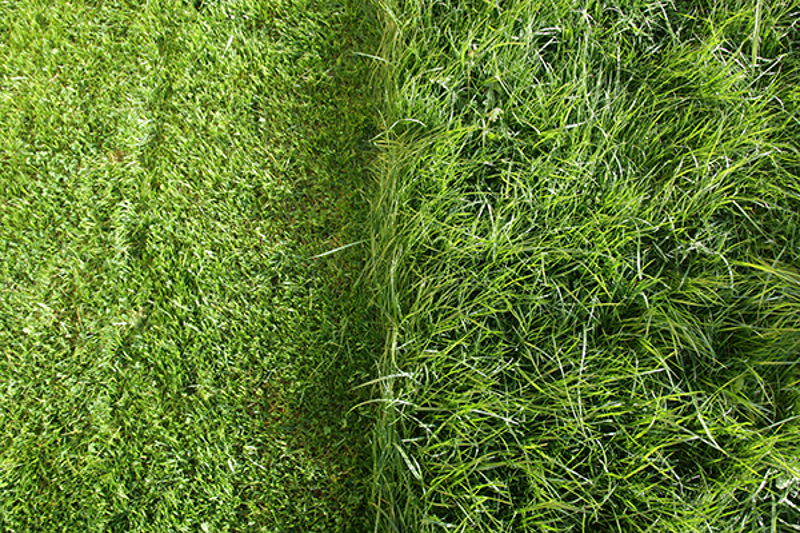
Raise the cutting height on your mower. Leaving a longer leaf shades the soil better, which helps reduce evaporation and keeps soil cooler. Longer grass retains more moisture in the extra bulk of leaves, plus it photosynthesises more efficiently, thus providing more nutrients. During summer, mow cool season grasses at 5cm and for warm season grasses mow at 2-4cm. In winter for cool season grasses, mow down to 3cm and for warm season grasses, only mow to keep weeds in check.
Stay alert for lawn pests. Insects like black beetle grubs begin chewing on your grass in spring. Their damage might not be obvious while the weather remains cool and wet, but the arrival of hot weather will take an immediate toll. Grass infested with pests is much more prone to drying out and dying off than healthy lawns. An early application of Yates Lawn Grub & Porina Kill + Protect will nip grubs in the bud.














Share
Share this article on social media