



Yates Lawn Grub & Porina Kill + Protect
Powered by Acelepryn® technology to eliminate a wide range of soil-dwelling lawn pests and provide up to 6 months protection. Easy to apply granular format.
Create a Yates account today!
Sign up to join the Yates Garden Club for monthly e-mails packed with seasonal inspiration, tips for success & exclusive promotions.
Plus if you’re a Garden Club member you can take part in the Yates Growing Community - a blog to share successes, get advice & win prizes in fun challenges along the way!

Enter the email address associated with your account, and we'll email you a new password.
Coleoptera
Costelytra giveni
(formerly known as Costelytra zealandica)
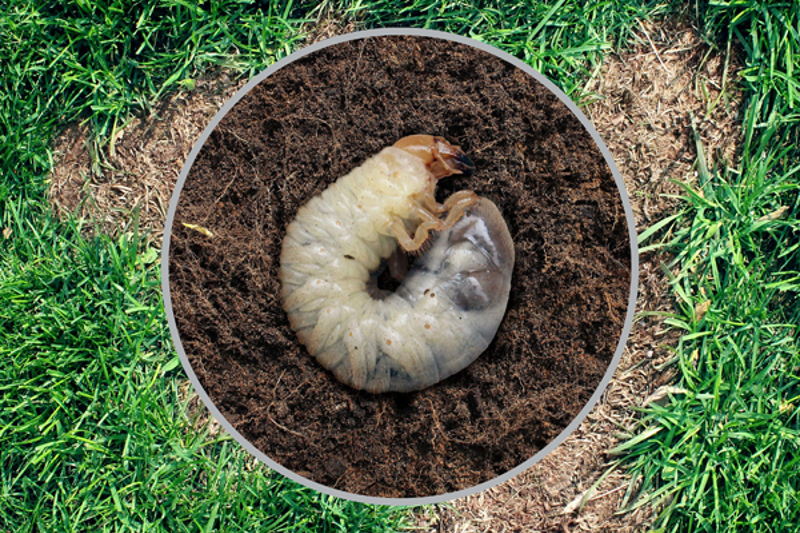
Grass grubs are among the most destructive pasture pests in NZ and are a real challenge for the agricultural sector, along with horrified lawn owners throughout the country.
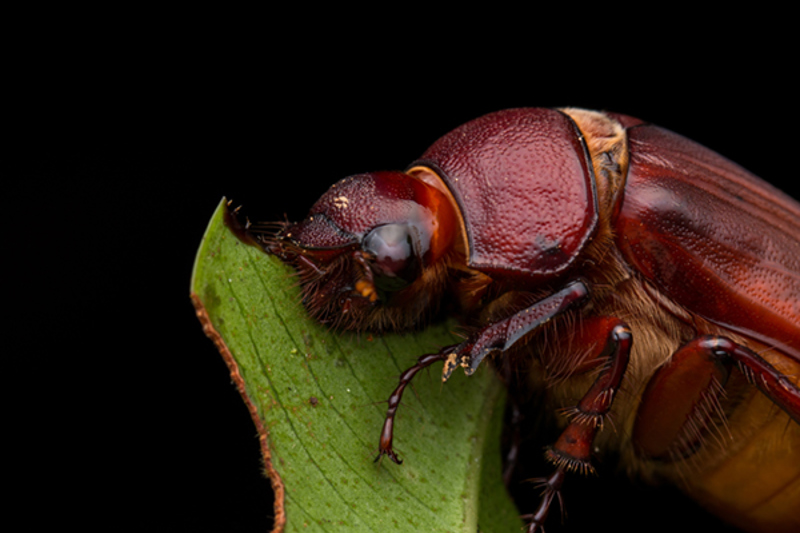
Grass grubs are the larval stage of a native scarab beetle, which chew at the roots of plants and lawns. Grass grubs feed on plant roots in large numbers; they can cause severe damage to lawns, gardens and potted plants. The nocturnal adult beetles are notorious for chewing holes in the leaves of fruit trees and vegetables, along with scarring fruit.
During late spring and summer, on warm, calm evenings the adult beetles fly in swarms, feeding and laying eggs in soil (in lawns, gardens and even in potted plants). Adult beetles are attracted to light, so it’s quite common between October and January to see them buzzing around street lighting. If your outdoor lighting is close to your lawn area, try to avoid using it for extended periods through spring and summer, to reduce the number of beetles that are attracted towards your grass. During the day the beetles will burrow into the soil, emerging again at dusk.
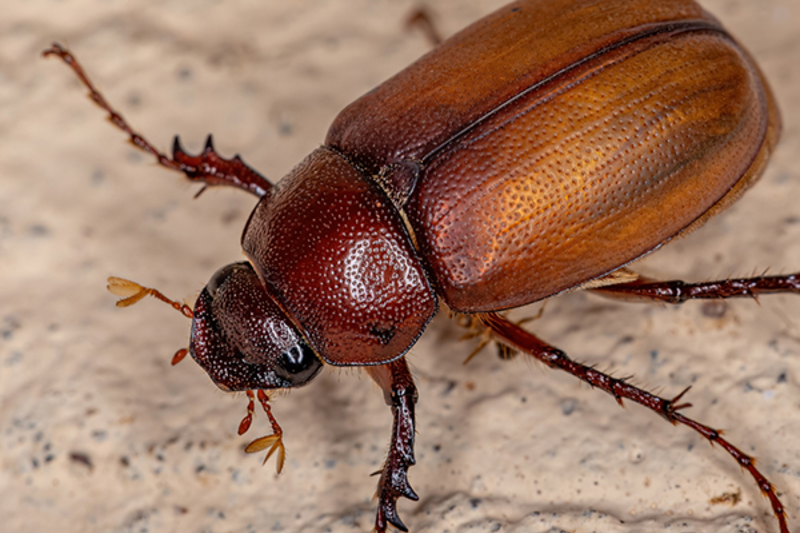
Grass grub beetle
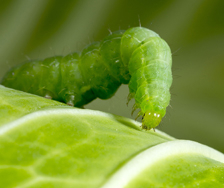
Grass grub larvae begin to hatch out in summer, and start grazing on subsoil roots immediately. Larvae are most active from autumn into winter, and can cause severe damage to lawns, gardens and potted plants during the cold season (when they reach their largest and most destructive size).
Grass grub larvae have a cream-coloured body with a tan or brown head. They grow from about 6mm to 20mm in size. The tail end of the grub may look darker brown, which is due to the soil the grub ingests during feeding. They have a distinctive ‘curl up’ behaviour when dug up or disturbed.
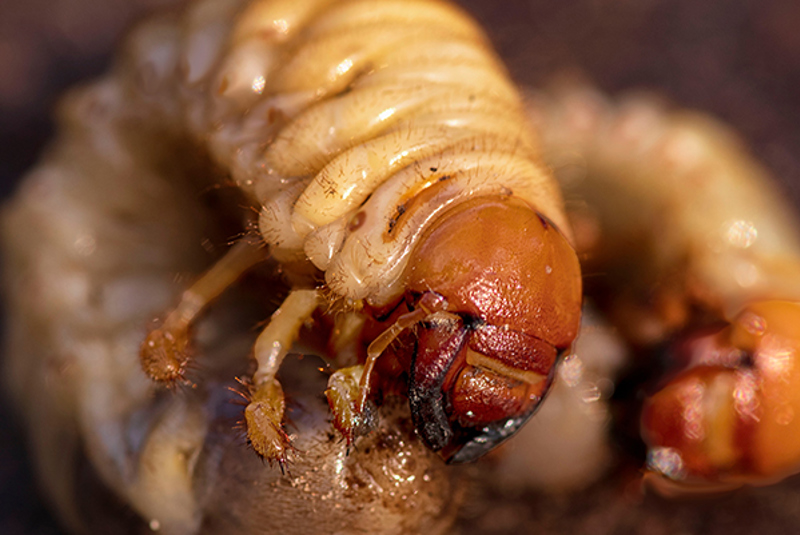
There are several species that look similar to grass grubs and share their destructive behaviour. Tasmanian Grass Grub (Acrossidius tasmaniae) is an introduced pest, active throughout the North Island, Canterbury and Marlborough. Although their grubs resemble grass grubs, you can identify Tasmanian grass grubs by their black heads (native grass grubs have tan or brown heads). Because these grubs live in vertical burrows and pop out at night to feed, most of their damage is caused to foliage above soil level.
In the upper half of the North Island, grass grub beetles are often confused with the smaller native Bronze Beetle (Eucolaspis brunnea), which flies in late spring to early summer. Bronze beetles share the obnoxious habit of chewing holes in leaves and damaging fruit; likewise, their larvae look very similar to grass grubs and will also attack grass roots.
Another species encountered in the upper half of the North Island is Black Beetle (Heteronychus arator). Black beetle larvae feed on grass and plant shoots below soil level, causing dead patches, yellowing and severed stems. The worst damage is concentrated from summer to early autumn (December - March).The timing of the damage is the easiest way to diagnose black beetle larvae in a lawn, because other grub species cause grass damage from autumn, stretching into winter. Their summer activity means black beetle is a particular pest of warm season grasses, like kikuyu and couch.
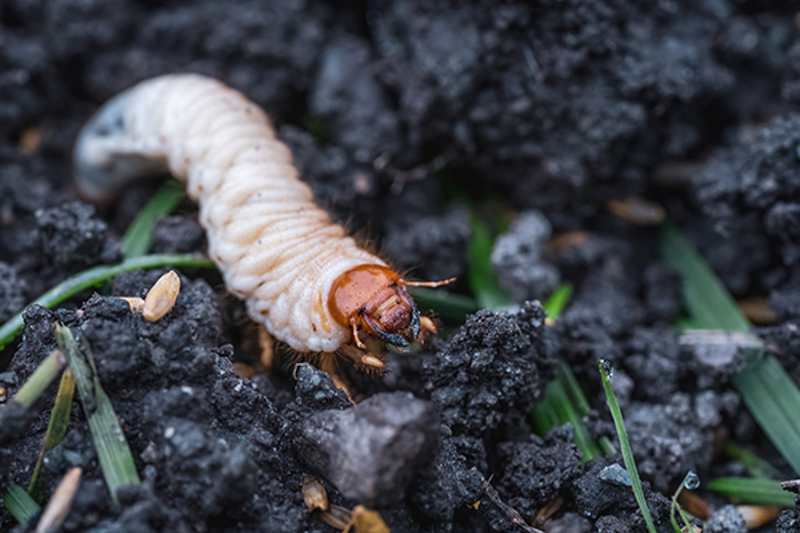
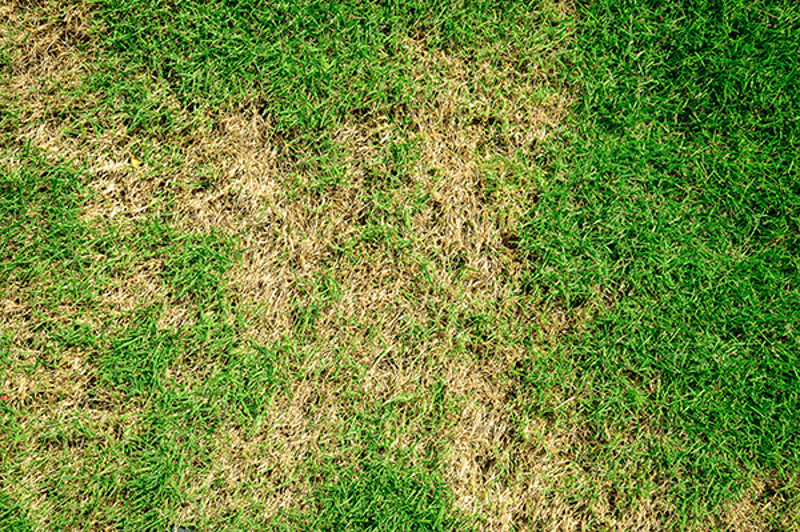
The classic symptom of grass grub infestation is brown dead patches developing in the lawn, or sections of grass that can be easily lifted up like the edge of a carpet. If plants in your garden or pots are wilting despite being well watered, that’s also a sign grubs may be at work.
To confirm grass grubs are the problem, you can do a ‘spade test’; this is how farmers have done it for generations. Step on your spade to cut a square hole in your lawn soil, about a spade-width on each side, and a spade-blade deep. Lever out the ‘cube’ of soil you’ve made and dump it into a wheelbarrow. Crumble up the soil cube, searching through it for white grubs. If you don’t find any grubs, repeat the process in a different spot – the more samples you take, the more reliable your test will be.
Yates Lawn Grub and Porina Kill + Protect delivers excellent preventative control against grass grub larvae. For best results, apply the granules from January to March. The product has an extended residual performance that provides up to 6 months protection.
The good news is that Yates Lawn Grub and Porina Kill + Protect effectively controls a range of other common lawn pests, including the 'similar but different' species mentioned above.
Keeping your lawn strong and healthy boosts its ability to resist pest pressure. Give your lawn a weekly deep watering, set the mower higher...and feed it regularly with Yates Dynamic Lifter Organic Lawn Food.


Share
Share this article on social media