






Yates Mavrik Insect & Mite Spray - Concentrate
Controls a broad range of insect and mite pests.
Create a Yates account today!
Sign up to join the Yates Garden Club for monthly e-mails packed with seasonal inspiration, tips for success & exclusive promotions.
Plus if you’re a Garden Club member you can take part in the Yates Growing Community - a blog to share successes, get advice & win prizes in fun challenges along the way!

Enter the email address associated with your account, and we'll email you a new password.
Hemiptera / Sternorrhyncha

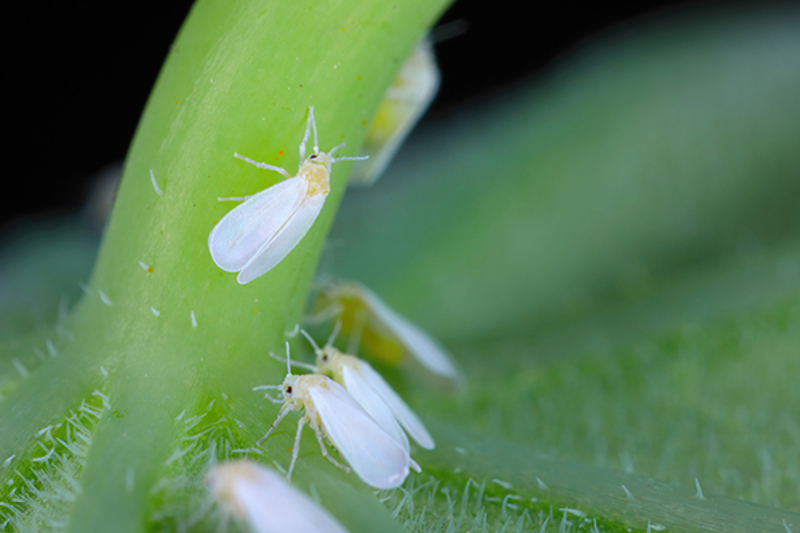
They're small white-winged sap-sucking insects...that aren't actually flies. They look more like tiny white moths, with a wingspan of 3mm. Whiteflies have become very prevalent in recent years and there are a few species that are major pests for home gardeners. Adult whiteflies and their nymphs (juveniles) feed by sucking the phloem sap from plants, causing lots of damage in the process. Infestations of whitefly can drastically hinder plant growth, plus reduce harvests.
The Greenhouse Whitefly (Trialeurodes vaporariorum) and the Sweet Potato Whitefly (Bemisia tabaci) are the most commonly encountered pest species in NZ. The Australian Citrus Whitefly (Orchamoplatus citri) is also found in the Auckland, Northland, Bay of Plenty and Hawkes Bay regions.
Whitefly are easy to identify: if you touch the infested plant, it disturbs them and a distinctive 'cloud' of tiny, fluttering insects will fly out. They stay in the air for a short time, before settling back onto the same plant.
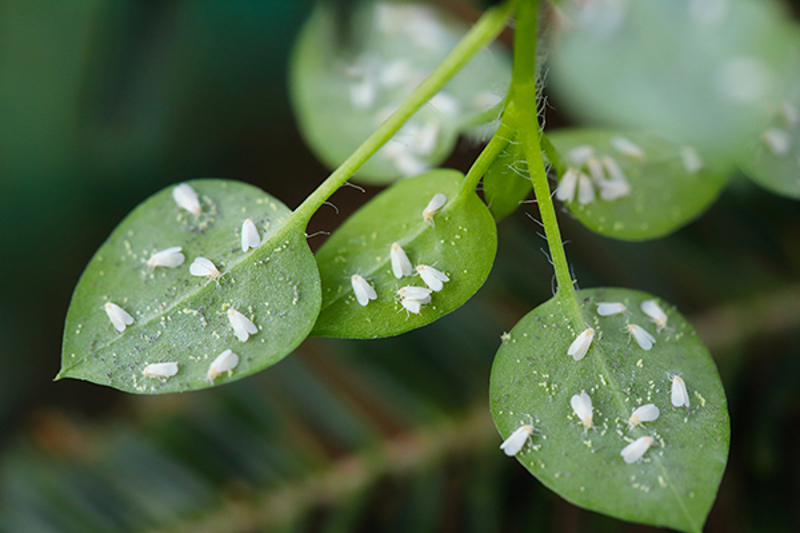
Whitefly is notoriously challenging to control, because it goes through two life stages that are resistant to pesticides. In practice, this means a single spray won't always control it completely. A quick explanation of the whitefly life cycle will be helpful to understand why.
The winged adults are usually found feeding on growing tips and new leaves. The females lay eggs on young leaves, close to where they're feeding. When the eggs hatch out, they go through four different larval stages, that resemble tiny scale insects. The last larval stage stops feeding when fully grown, then forms a pupa.
The reason they're so difficult to control is that the egg and pupal stages are physically shielded, so they are effectively resistant to insecticides. The adults and youngest nymphs are easily controlled by most pesticides.
Because you can usually find all the different whitefly life stages on the same leaf at the same time, a single spray often won't kill them all. Shortly after being sprayed, the surviving whitefly can emerge from their pupae and begin feeding, while the unaffected eggs hatch out and begin to mature. This head start can allow them to repopulate the infested plant, before the next scheduled insecticide spray is due.
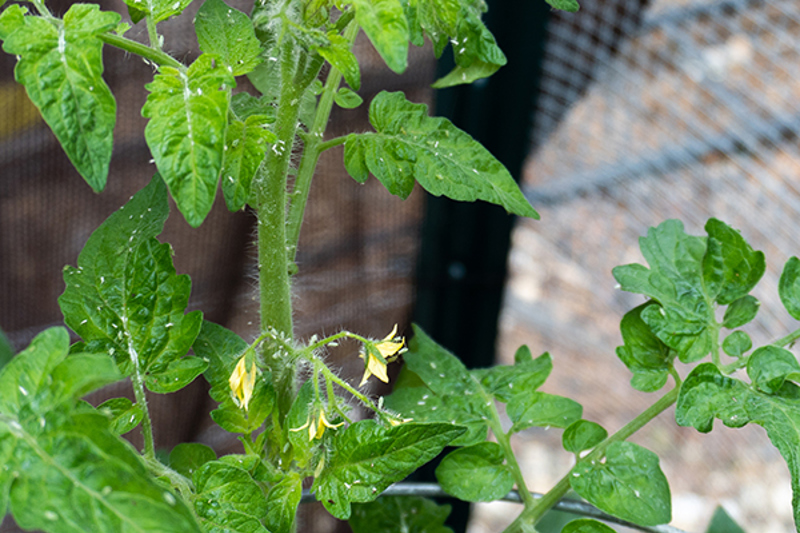
When whitefly pest pressure is high, their ability to 'bounce back' after a spray can be very frustrating for gardeners! It's very tempting to increase the mix rate, or shorten the spray intervals, but this does more harm than good. Whitefly develop resistance to insecticides very quickly, especially when the insecticide is overused. There are good reasons behind the label directions, so it's always best to follow them closely.
Fortunately, we do have a solution! Scroll down for advice on alternating different insecticides. This technique allows gardeners to interrupt the whitefly life cycle, without departing from the label directions, and it doesn't increase the risk of whitefly developing resistance.
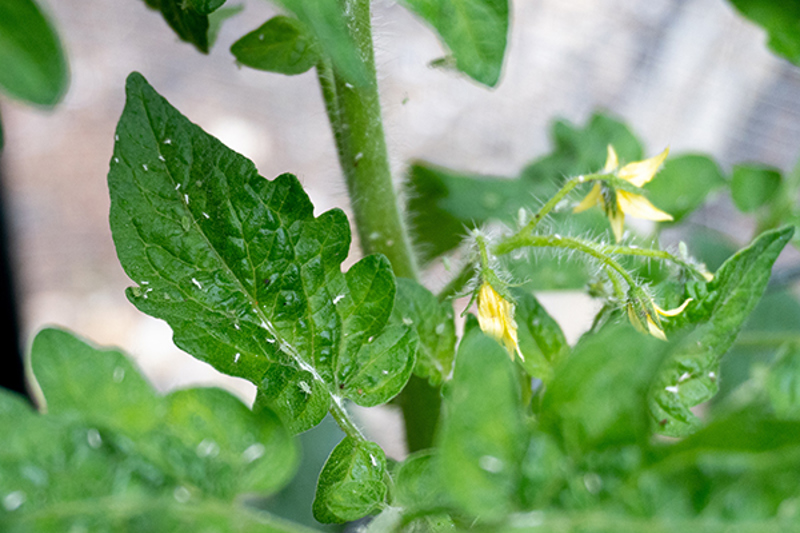
Wilting and stunted new shoots are classic signs. Whitefly can cause silvering and yellowing of leaves, uneven ripening of tomatoes and substantial infestations can cause plant death.
Sooty mould often accompanies large numbers of whiteflies, because like many other sucking pests, they excrete honeydew when feeding on plant sap.
Whitefly is best controlled using two different insecticides and alternating them, in overlapping applications.
When you alternate between different insecticides, with different modes of action, this delivers the control you're looking for. This method allows you to follow the label directions, and it doesn't increase the risk of whitefly developing resistance (whereas over-doing it definitely increases that risk).
For example: Yates Mavrik has a 1-week spray interval. If you apply Mavrik at the weekend, you can then alternate with a mid-week dose of a different insecticide. A good example would be Yates Nature's Way Natrasoap Vegie Insect Spray, which also has a 1-week spray interval. When the next weekend arrives, it's time for for your next application of Mavrik...and so on. Keep up the cycle of overlapping applications until the whitefly population is significantly reduced, then continue to monitor their numbers.
Using this technique, you'll be able to interrupt the whitefly life cycle and take control. Ensure you get complete spray coverage, including on the underside of leaves.
Spraying is best done in the early morning or late afternoon while the insects aren't as active.


Share
Share this article on social media