



Yates Zero Tough Heavy Duty Weedkiller - Ready to Use
Extremely effective at controlling the toughest, hard-to-kill and invasive weeds and grasses (such as ivy, gorse & bamboo) - roots and all.
Create a Yates account today!
Sign up to join the Yates Garden Club for monthly e-mails packed with seasonal inspiration, tips for success & exclusive promotions.
Plus if you’re a Garden Club member you can take part in the Yates Growing Community - a blog to share successes, get advice & win prizes in fun challenges along the way!

Enter the email address associated with your account, and we'll email you a new password.
Poaceae
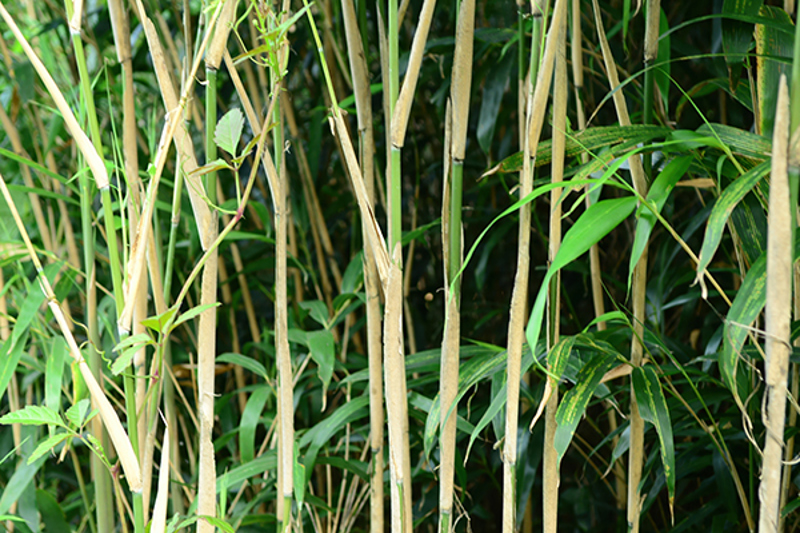
Arrow Bamboo (Pseudosasa japonica)
Bamboos are very fast-growing perennial grasses. The tall, woody stems, known as culms, form distinctive hollow tubes between their jointed nodes. Bamboo can out-compete and completely exclude most other plants or trees, quickly growing into dense stands.
Bamboo is classified by growth habit, into running or clumping types.
‘Running’ bamboo spreads aggressively by pushing out long underground rhizomes (runners), which form multiple shoots along their length. Each shoot grows vertically into a tall culm. These species can quickly form an intertwined layer of rhizomes that shuts out other plants.
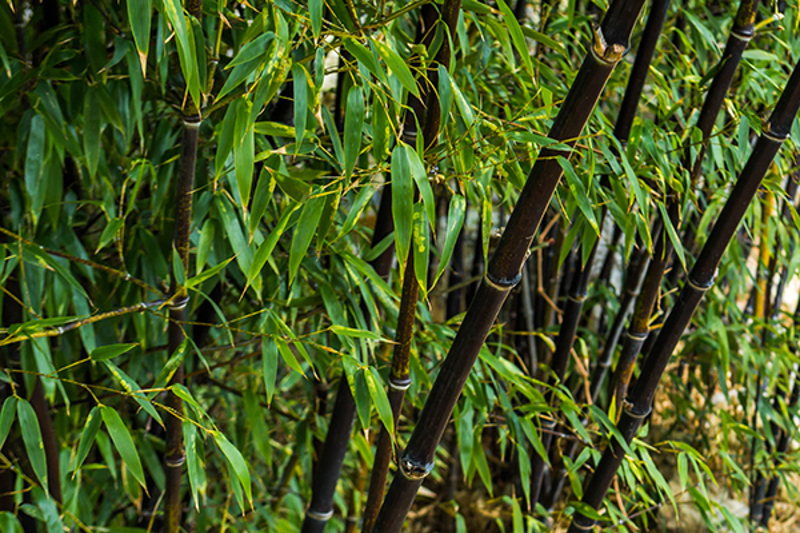
Black Bamboo (Phyllostachys nigra)
‘Clumping’ bamboo is less invasive than running types. Clumping bamboo has short sympodial rhizomes that form a single shoot, which grows straight upwards into a new culm. Clumping types still spread, but they’re slower and they tend to stay in a tight cluster.
Pro Tip: To minimise problems with bamboo, plant clumping varieties, rather than running types.
If you want to plant bamboo as a privacy screen or hedge, first check your local Council’s Pest Management Plan, to confirm your chosen bamboo isn’t on the list of banned invasive species.
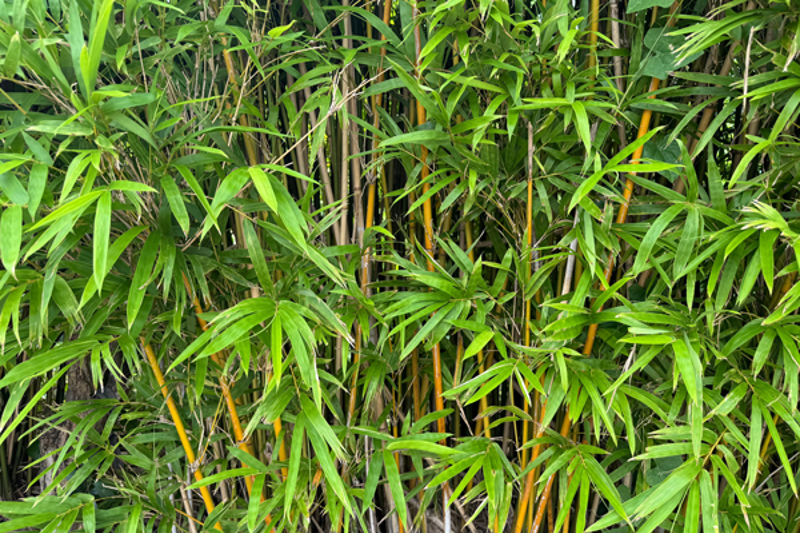
Golden Bamboo/Walking Stick Bamboo (Phyllostachys aurea)
Several running bamboo species, introduced from cool climates, have become invasive in NZ. The main offenders are:
Arrow Bamboo (Pseudosasa japonica) grows to 5m high. It has dark green stems (culms) and a couple of unique features: a pale white band just below each nodal joint, and long, papery light brown sheaths attached to the top of the nodal joint, often covering the stem. These sheaths start as a protective leafy structure for new shoots; they quickly drop off on most bamboo species, but they stay attached to arrow bamboo as the culms grow. It’s hardy, adaptable, and resistant to freezing temperatures.
Black Bamboo (Phyllostachys nigra) grows to 3-7m in height. New shoots are pale green, turning a shiny black colour as they mature. The tall dark stems make a striking contrast with slim, dark green leaves. It’s a very attractive garden specimen, but unfortunately it spreads aggressively. Very hardy, tolerates severe frost.
Golden Bamboo/Walking Stick Bamboo (Phyllostachys aurea) reaches a height of 3-6m in NZ. This species was historically planted for frost-hardy shelterbelts, allowing it to become naturalised across much of NZ. Stems turn from green to a bright golden-yellow colour as they mature. Its unusual characteristic is that the lowest part of the stem often looks swollen and twisted into a zigzag shape, plus the nodal joints are squeezed closely together at the base of the stem (culm) but become more stretched out towards the top.
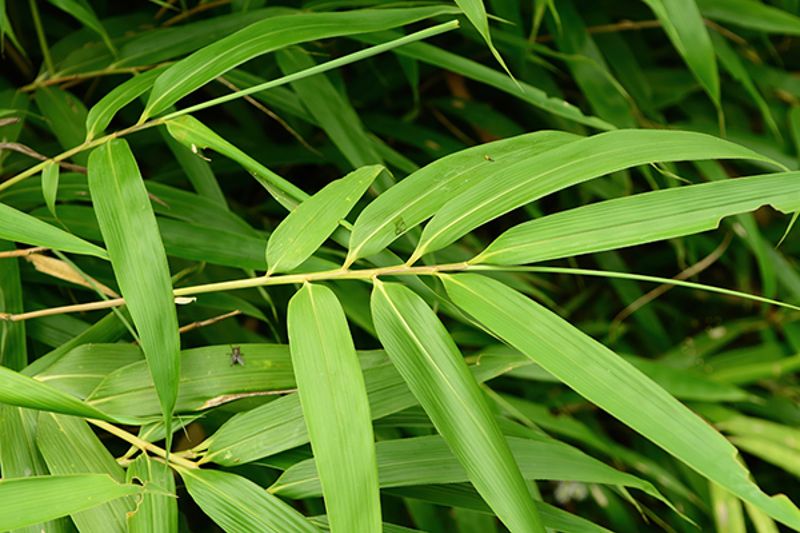
Arrow Bamboo (Pseudosasa japonica)
Cut back bamboo regularly to keep it under control. When culms are cut, they stay conveniently at the same height, so it’s possible to control the height and shape of bamboo hedging for aesthetic reasons.
A safeguard to prevent bamboo spreading out of control is to ‘corral’ it with plastic root barrier or sheet metal. For a bamboo privacy screen, plant into a trench lined on both sides with root barrier. The ideal barrier is around 60cm wide, installed 50cm deep and leaving 10cm or so sticking up out the soil. This is enough to deter the rhizomes from reaching over the top or sneaking underneath.
Existing stands of bamboo can be manually controlled by digging out the runners and staying vigilant to remove any new shoots, but it’s hard work!
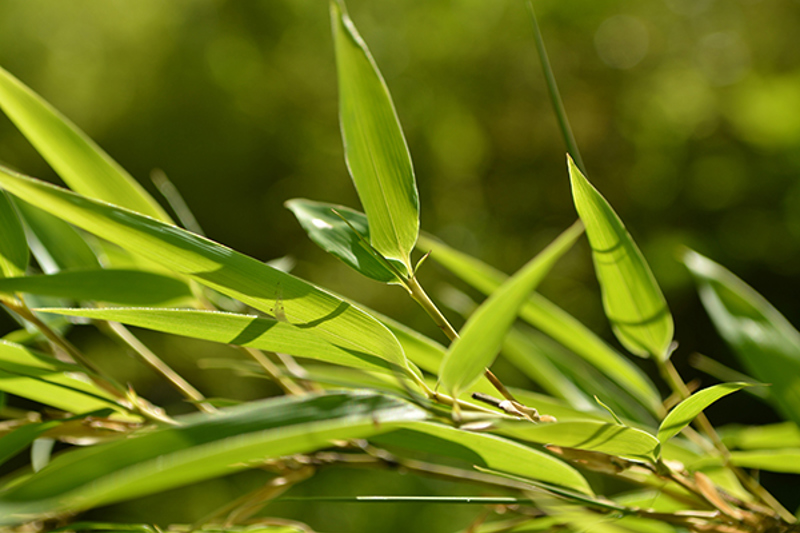
Black Bamboo (Phyllostachys nigra)
Eradicating bamboo that has gotten out of hand isn’t an easy process. Mature bamboo can be physically removed by digging out all of the rhizomes to a depth of about 50cm. Manually digging out large stands of bamboo is exhausting work, so using a mechanical digger or excavator is a common removal method.
In most situations, we recommend a combination of cutting down bamboo and spraying it with weedkiller. A well-established network of rhizomes contains a lot of stored energy, that can enable it to recover after it's sprayed. Repeat applications of weedkiller will deplete its ability to resprout, so with perseverance, you can get complete control of bamboo. So, grab your gloves and eye protection and follow these steps:
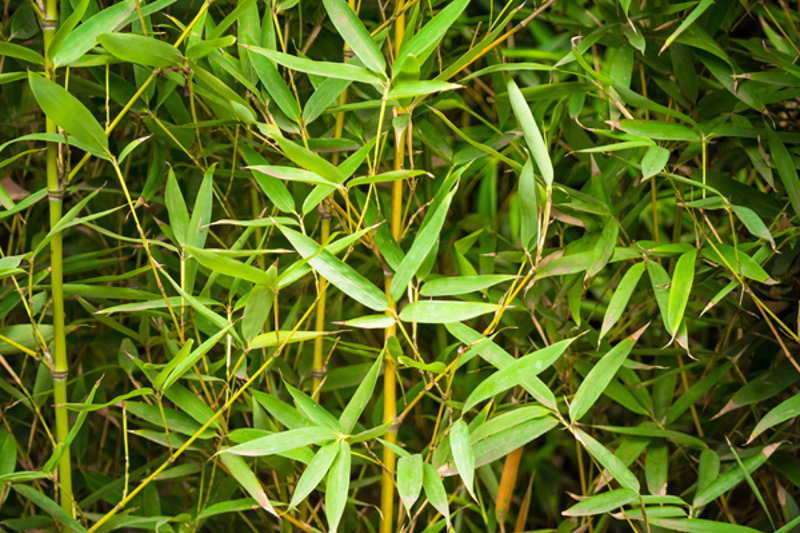
Golden Bamboo/Walking Stick Bamboo (Phyllostachys aurea)


Share
Share this article on social media