
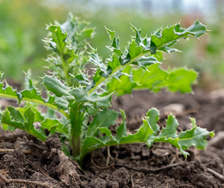




Yates Lawn Grub & Porina Kill + Protect
Eliminates destructive black beetle larvae in lawn soil, then provides up to 6 months ongoing protection. Effective on a range of soil-dwelling lawn pests.
Create a Yates account today!
Sign up to join the Yates Garden Club for monthly e-mails packed with seasonal inspiration, tips for success & exclusive promotions.
Plus if you’re a Garden Club member you can take part in the Yates Growing Community - a blog to share successes, get advice & win prizes in fun challenges along the way!

Enter the email address associated with your account, and we'll email you a new password.
Coleoptera
Heteronychus arator
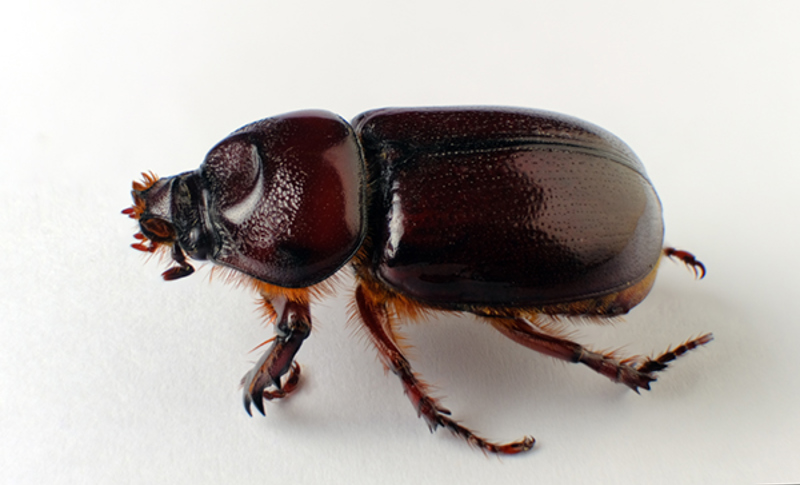
The Black Beetle is an introduced pest species. In NZ it’s mostly found in the upper North Island. Larvae are easily mistaken for native NZ grass grubs (Costelytra giveni) or bronze beetles (Eucolaspis brunnea).
Damage to garden plants is caused by both the adult beetles and their larvae. Adults mostly feed on plant shoots and stems, just above or below the soil surface (they can burrow as deep as 15cm). Adult beetles fly in swarms, most often on warm nights – especially when they emerge from their pupae in autumn, with another peak while they lay eggs in spring. Flying beetles are attracted towards outdoor lights.
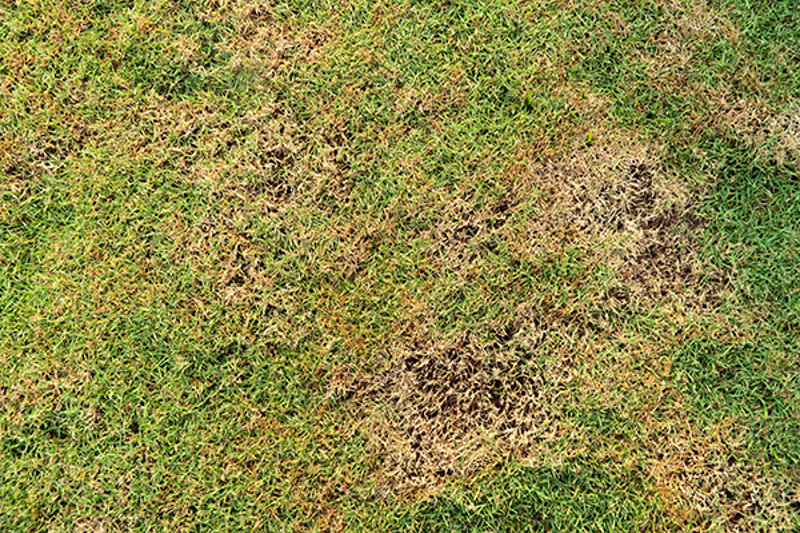
Black beetle larvae feed on grass and plant shoots below soil level, causing dead patches, yellowing and severed stems. The worst damage is concentrated from summer to early autumn (December - March).
The time of year is the easiest way to diagnose black beetle larvae in a lawn, because other grub species cause grass damage from autumn, stretching into winter. This summer activity means black beetle is a particular pest of warm season grasses, like kikuyu and couch.
Eliminates destructive black beetle larvae in lawn soil, then provides up to 6 months ongoing protection. Effective on a range of soil-dwelling lawn pests.
A fast-acting insecticide for lawns, to control surface-dwelling pests. The granular formulation kills adult black beetles on contact.
Most grass varieties are susceptible to damage, severely impacting lawns and pasture. Warm-season lawn types are at higher risk, due to the grub season.
Adult beetles are known to feed on fresh-sown lawn seed during autumn, so a preventative application of Yates Lawn Grub & Porina Kill + Protect is recommended alongside sowing.
Young plants and seedlings are vulnerable to attack by beetles.
Ornamental garden plants and potted plants may also be impacted.
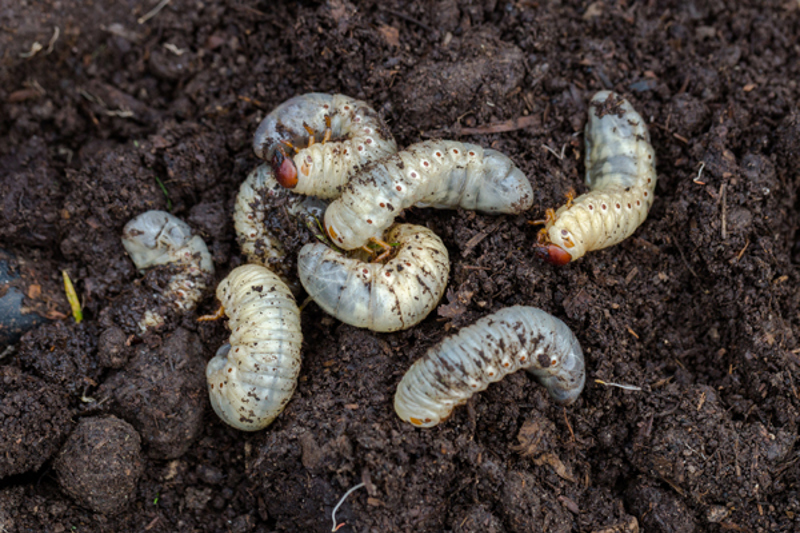
Usually, there is just one generation of Black Beetle per year. However, depending on environmental conditions, it can take up to 2 years to complete their lifecycle.
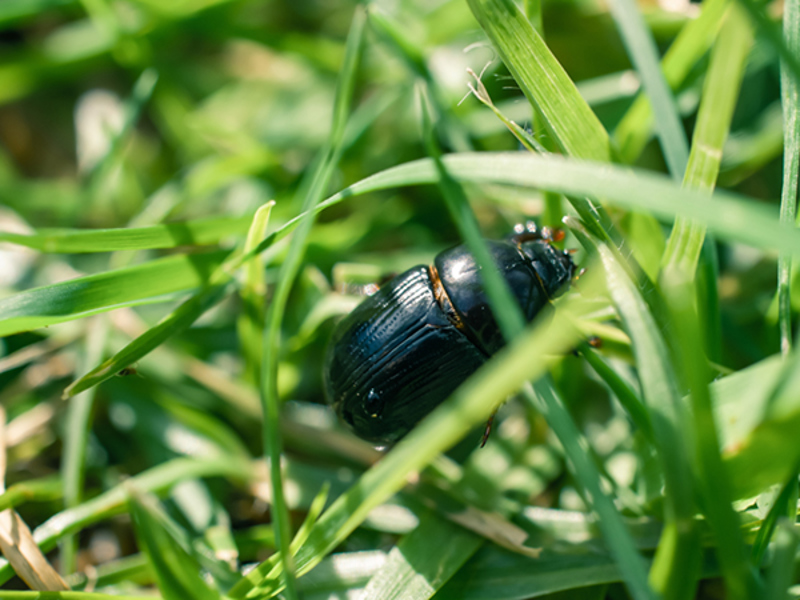
Beetles are glossy black, oval-shaped and 12-15mm long. On the underside of the body are light-brown bristle-like structures (setae). The short, broad head is angled downwards, with short, golf-club-like antennae on each side.
Legs are lightly covered in spines. Beetles have 2 pairs of wings, the outermost are hardened forewings (elytra) that protect the delicate membranous flight-wings while they're on the ground. Adult beetles are slow crawlers.
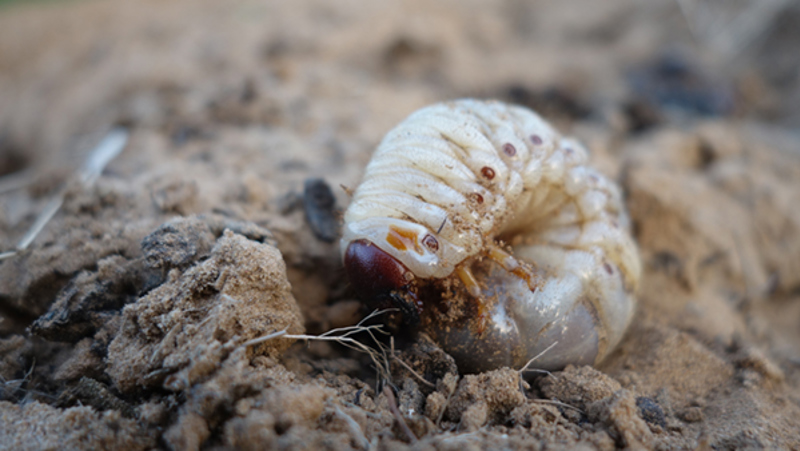
The grub-like larvae have a creamy-white body, with an orangey-brown head. The hind section of the body is generally swollen and grey-blue to green in colour, due to the visible soil in their gut. The segmented body grows up to 25mm long. Larvae have a distinctive 'curling into a C-shape' behaviour when disturbed. The larvae are easily mistaken for grass grubs, so the time of year is the best hint for telling them apart: black beetle larvae are expected between summer and early autumn (December - March)


Share
Share this article on social media