


Yates Hydrocotyle Killer - Concentrate
An effective selective weedkiller for the control of hydrocotyle, creeping oxalis, broadleaf weeds (including daisies and clover) in grass lawns.
Create a Yates account today!
Sign up to join the Yates Garden Club for monthly e-mails packed with seasonal inspiration, tips for success & exclusive promotions.
Plus if you’re a Garden Club member you can take part in the Yates Growing Community - a blog to share successes, get advice & win prizes in fun challenges along the way!

Enter the email address associated with your account, and we'll email you a new password.
Taraxacum spp., Leontodon spp., Hypochaeris spp., Crepis capillaris
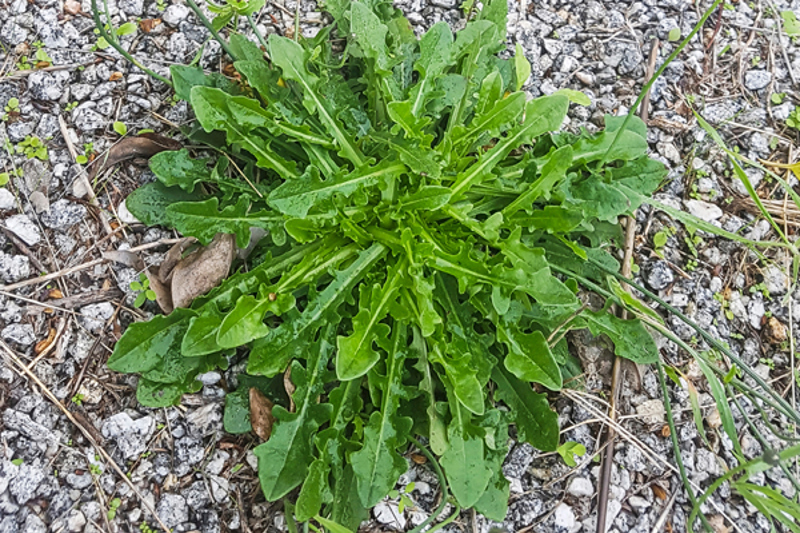
Hawkbit (Leontodon taraxacoides)
These weed species are covered together because at first glance, it’s difficult to tell them apart. Fortunately, the solution is the same for all of them! They do have distinctive individual features, so read on if you’d like to identify them, or go straight to how to get rid of them.
All four species grow from flat rosettes of broadly similar looking, deeply toothed leaves. They all have yellow flowers, and all form white feathery globes of wind-blown seeds (known as a pappus). All four have taproots that allow them to thrive in poor soil, or survive drought conditions that kill shallower-rooted grass. Because these species have flat, ground-hugging leaves, they can tolerate mowing and settle in to become permanent fixtures in your lawn.
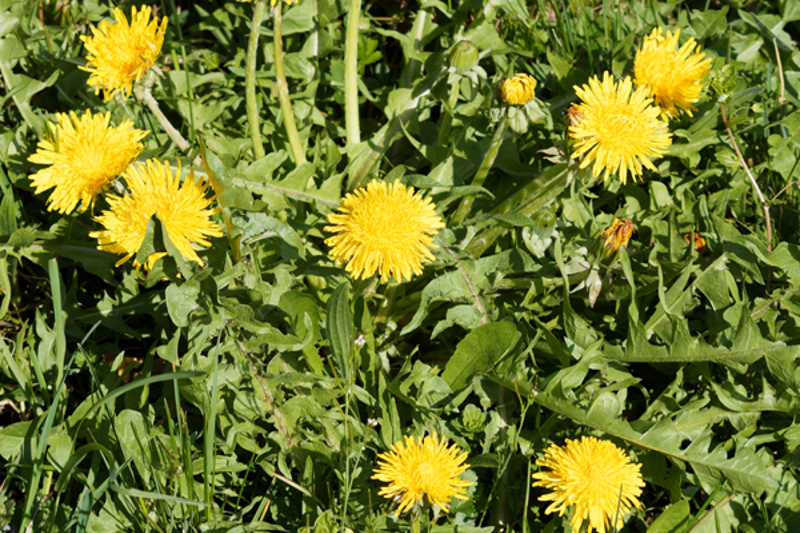
Dandelion (Taraxacum officinale)
Dandelion (Taraxacum officinale) is a perennial weed with smooth-textured, jagged-shaped leaves. The sharp-toothed edges of the leaves earned dandelion its name: “dent-de-lion” is French for "lion's tooth." Dandelions form a large, single flower at the top of each stem. The upright stems are soft and tender, exuding milky latex sap when broken. Both the stems and leaf stalks have hollow centres.
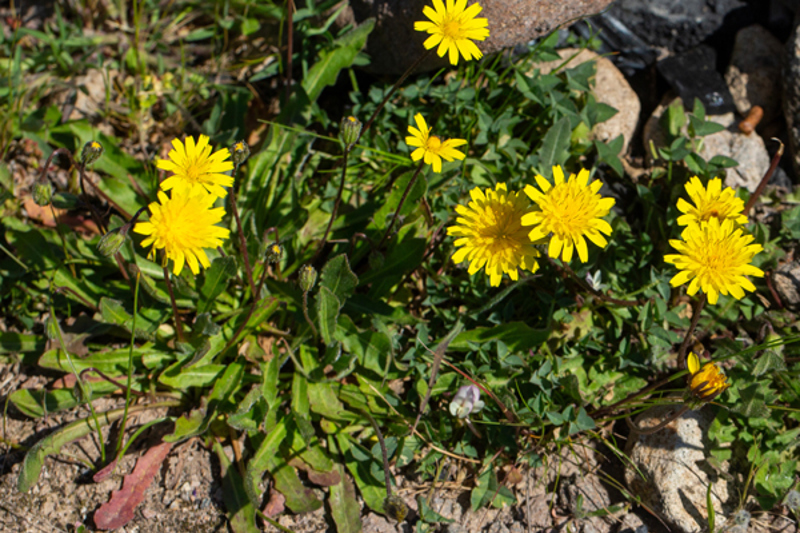
Hawkbit (Leontodon taraxacoides)
Hawkbit (Leontodon taraxacoides) is a perennial with hairy, narrow leaves. Like dandelion, hawkbit develops a single yellow flower at the top of each stem. The tall stems are distinctively solid and wiry; they aren't hollow like dandelions. Stems are also covered with hairs.
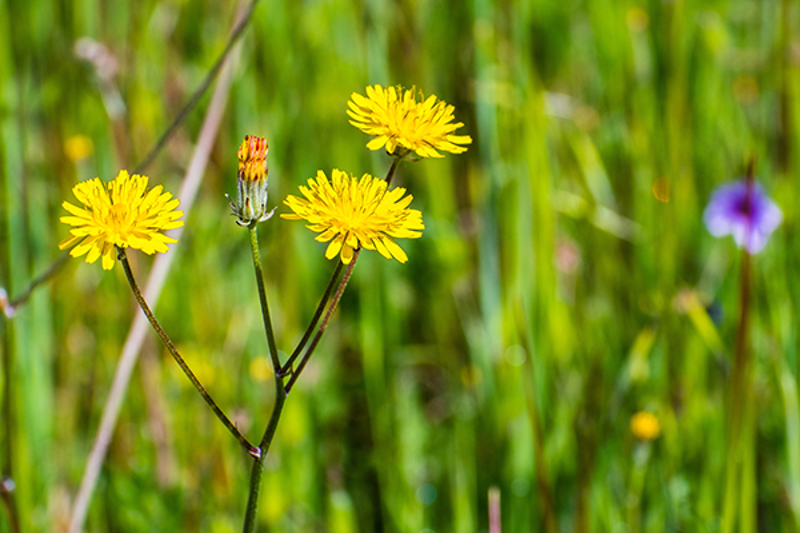
Catsear (Hypochaeris radicata)
Catsear (Hypochaeris radicata) is also perennial, with wide, hairy-looking leaves. The tall, leafless flower stems fork into several branches, with flowers forming at the tips.
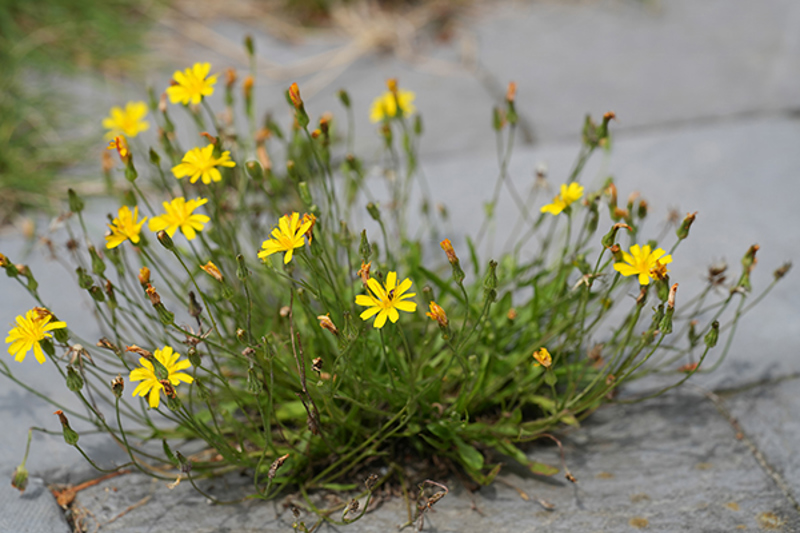
Hawksbeard (Crepis capillaris)
Hawksbeard (Crepis capillaris) is the odd-weed-out in the group, as it’s an annual (or biennial). It has a habit of invading bare patches of soil in lawns or gardens.
Hawksbeard has smooth-textured leaves, usually slimmer than dandelion. The flower stems fork into multiple branches, with leaves carried on their upper sections. Small yellow flowers form at the tip of each branch.
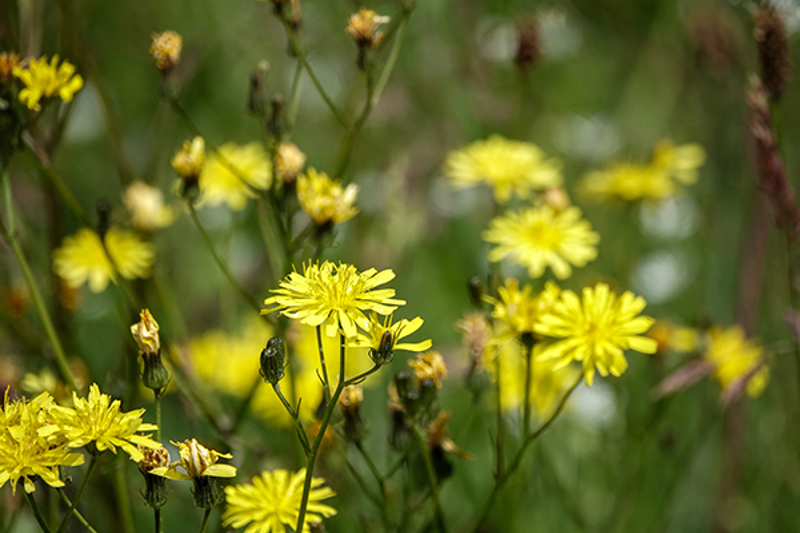
Hawksbeard (Crepis capillaris)
To control these species in lawns, choose a selective weedkiller. This type of weedkiller kills broadleaf weeds like these, but doesn't harm your lawn grass.
The easiest and fastest option is Yates Weed'n'Feed hose-on. Simply click it onto the garden hose and turn on the water, to apply a gentle fan of spray onto your lawn. Weed'n'Feed products are dual-use: they kill weeds, but they also deliver nutrients to feed the grass. If you're time-poor, this is the product for you.
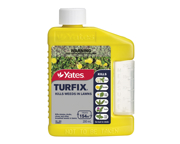
Yates Turfix is also a go-to choice for keen lawnies. Turfix contains 3 active ingredients to target a much wider range of weeds than just these four!
For garden beds, spot spray them with Yates Zero Super Concentrate (note: this isn't a selective weedkiller, so be careful not to get overspray on your precious plants).
Pro Tip: Warm-season grass types like kikuyu or couch are sensitive to selective weedkillers and may be damaged if they're sprayed while under stress, or during warm weather. Yates Weed'n'Feed Granular is a safer choice for these lawn types.


Share
Share this article on social media