





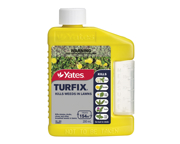
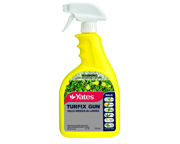
Yates Turfix Lawn Weed Spray - Concentrate
A go-to selective lawn weedkiller, formulated with three clever active ingredients. Turfix kills your lawn weeds, but not your lawn!
Create a Yates account today!
Sign up to join the Yates Garden Club for monthly e-mails packed with seasonal inspiration, tips for success & exclusive promotions.
Plus if you’re a Garden Club member you can take part in the Yates Growing Community - a blog to share successes, get advice & win prizes in fun challenges along the way!

Enter the email address associated with your account, and we'll email you a new password.
Try Yates Turfix Lawn Weed Spray, an old favourite for regular applications.
Tips for application:
There are a handful of introduced dock species in NZ, plus a couple of native species. Several of the exotic species are widespread as weeds: most dock prefers moist conditions and fertile soil, so it’s a common invader of gardens, lawns and pasture.
Scroll down to read all about dock, or press the green button to go straight to the fix!
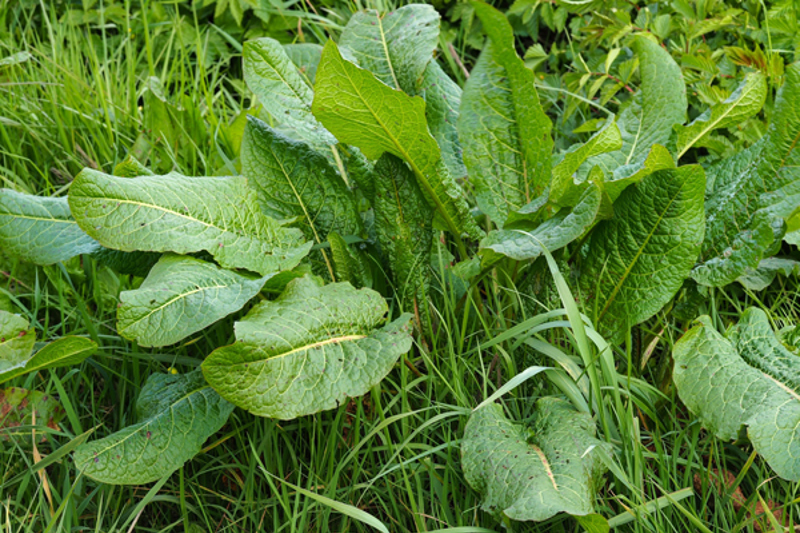
Broad-leaved Dock (Rumex obtusifolius)
Some herbicides don’t work well on dock, so it’s best to double-check before you buy, to be certain of good results. Fortunately, you do have effective weedkiller options, including selective options to clear out dock from lawns, without harming lawn grass.
Dock species are perennials. They’re very hardy and resilient, as they have long stout taproots that allow them to survive drought and hard frosts. Dock spreads by seed; each plant can produce thousands of viable seeds, which are widely distributed by birds. Dock seeds are notorious for their ability to survive in soil for decades before germinating.
Surprisingly, most dock leaves are edible, although they contain relatively high levels of bitter-tasting oxalic acid, so the youngest leaves are the best for foraging.
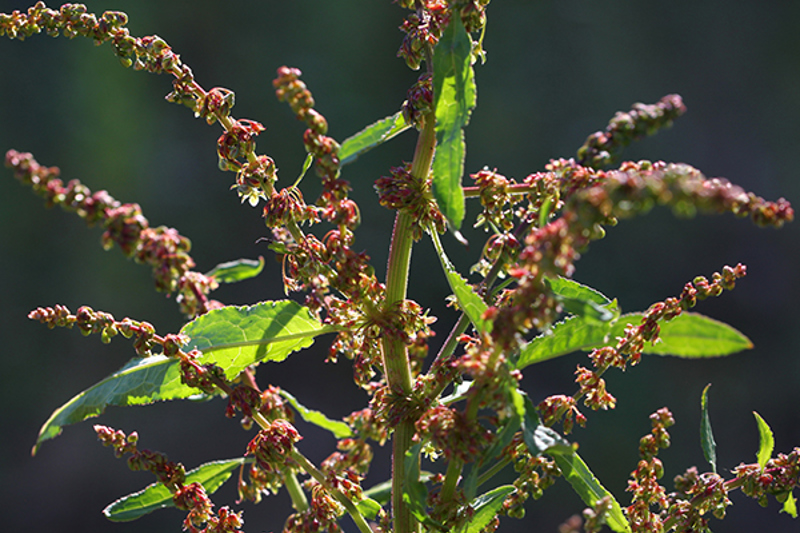
Broad-leaved Dock (Rumex obtusifolius) flowering stems
Broad-leaved Dock (Rumex obtusifolius)
This a very common, widespread weed in NZ. Leaves are wide and heart-shaped where they join the stem. Leaves have hairy undersides, growing to about 30cm and held on long stems. Each plant produces multiple upright flowering stems, that reach up to 1m tall. They carry clusters of green or red flowers, that produce tiny fruits, that contain seeds. Stems dry out and turn rusty brown at the end of summer.
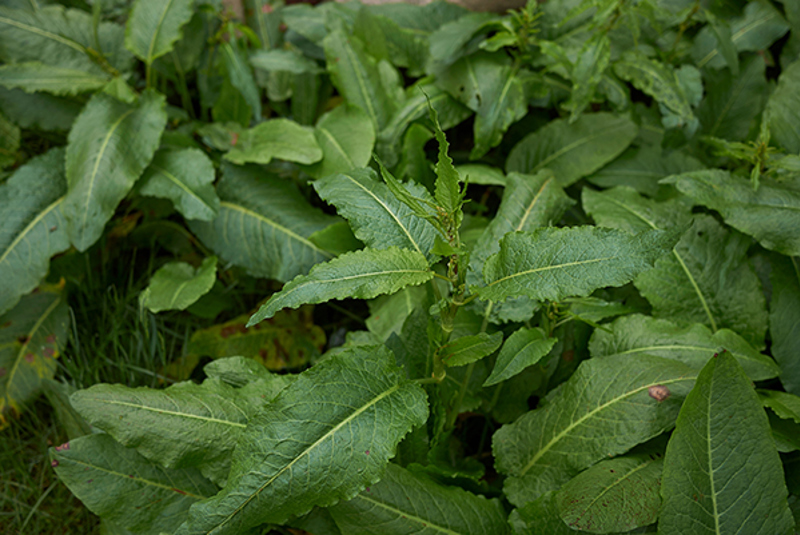
Curled Dock (Rumex crispus)
Curled Dock, aka Yellow Dock (Rumex crispus)
Looks similar to broad-leaved dock, but although the leaves are around the same length, they're a lot narrower in width. Leaves have crinkled edges and are sharply tapered at the tips. During summer and autumn, it sprouts bushy upright flowering stems, up to 1m. Leaves and seeds are edible, although they’re also high in oxalates, so they’re very bitter.
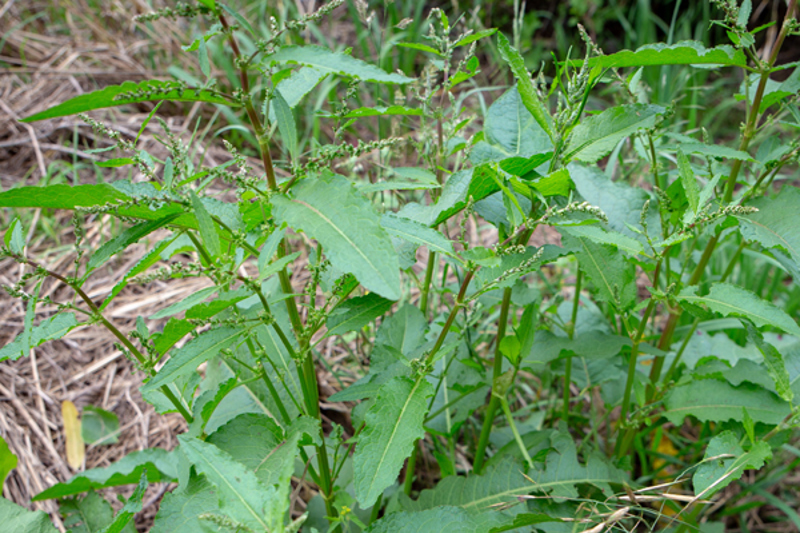
Clustered Dock (Rumex conglomeratus)
Clustered Dock (Rumex conglomeratus)
The smooth-textured leaves are also narrow, a similar shape to curled dock, with pointed tips and a rounded stalk-end. The jointed flowering stems spread into multiple branches, that carry small leaves up towards the top. Clustered dock prefers very wet soil conditions, like drainage ditches, creek edges or soggy lawns.
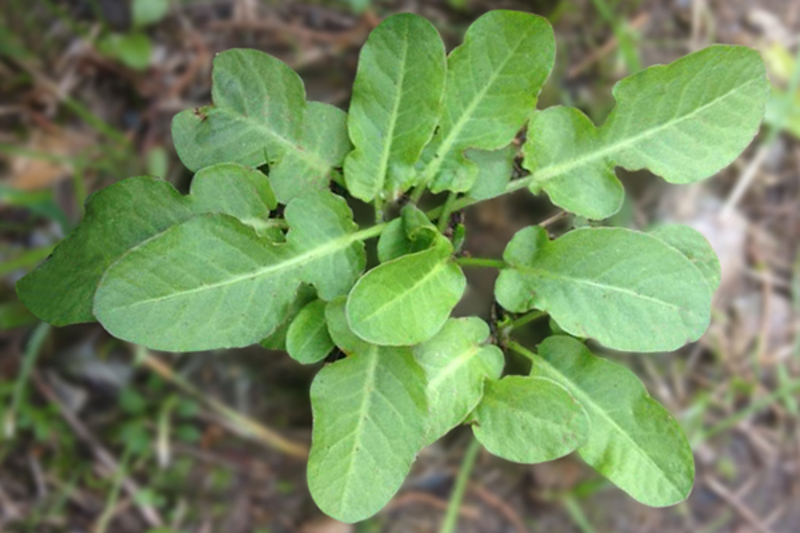
Fiddle Dock (Rumex pulcher)
Fiddle Dock (Rumex pulcher)
A widespread weed in NZ. Fiddle dock leaves are smaller than the other common species. The rosettes of distinctive hourglass-shaped leaves stay flat when they’re regularly mowed, so they tend to be persistent lawn weeds.
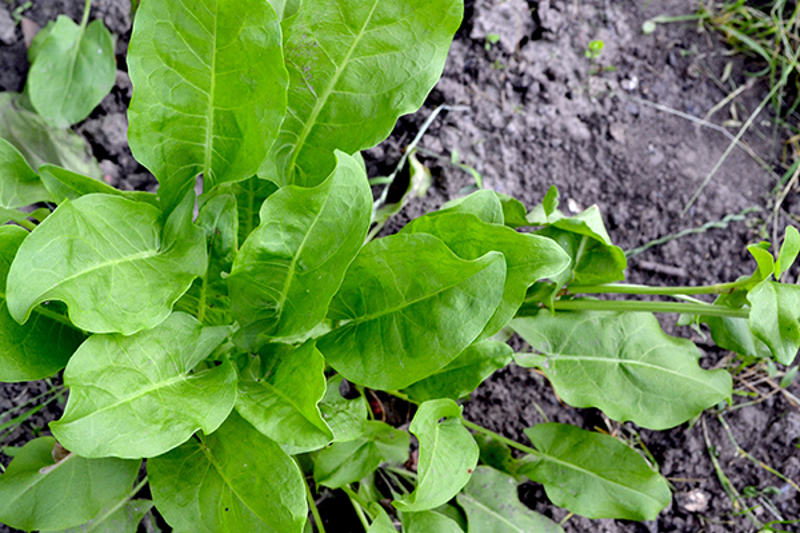
Sorrel (Rumex acetosella)
Sorrel, aka Sheep’s Sorrel, or Field Sorrel (Rumex acetosella)
Plenty of gardeners wouldn’t describe this one as a weed, as it’s a classic source of tangy salad leaves, but it can be a nuisance if left uncontrolled. Sorrel doesn’t have a taproot, instead it has creeping roots that spread to form substantial mats when it’s mature and well-established. The smooth, arrowhead-shaped leaves grow in rosettes, that sprout upright, branching stems of red flowers in spring and summer. Sorrel has a characteristic tart taste, as the leaves contain generous levels of oxalates.
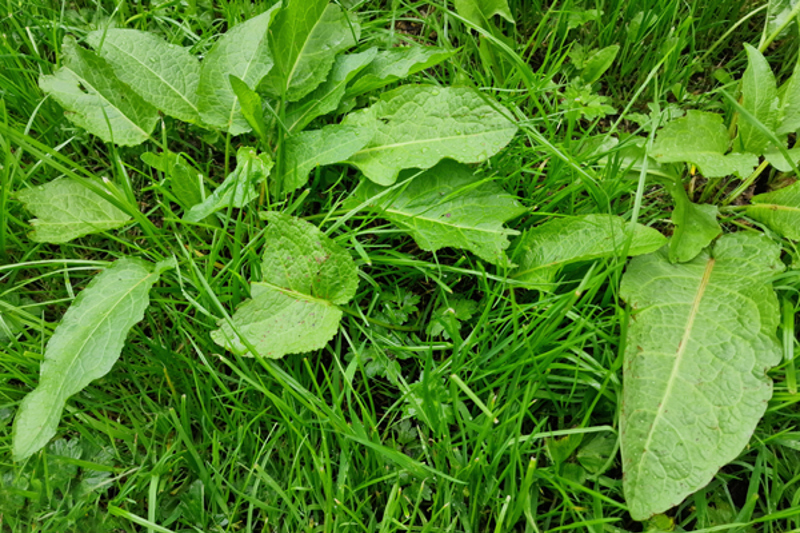
Broad-leaved Dock (Rumex obtusifolius)
For lawns, Yates Turfix is a trusted, old favourite solution. It’s a selective weedkiller, that contains 3 active ingredients to target a wide range of lawn weeds - but leaves your grass unharmed.
In lawns, dock is often accompanied by challenging hydrocotyle or buttercup weeds, that also prefer moist soil conditions. In this situation, Yates Hydrocotyle Killer is a great choice to remove the weeds and protect your grass.
For garden beds, you can spot spray dock with Yates Zero Super Concentrate (Note Zero isn't a selective weedkiller, so be careful not to get overspray on your precious plants).
To stop dock from spreading, it’s important to prevent it from flowering. By the time the stems dry out and brown off, they contain thousands of viable seeds. This means more weeds to deal with next year! Dock seeds remain viable in soil for many years, but if you get into a good routine to control them, after a couple of seasons it reduces the ‘seed bank’ in your lawn soil. This makes it easier to maintain a clean looking lawn.
If you proactively apply weedkiller in early spring, late spring (if necessary) and early autumn, you'll suppress dock, along with a wide range of other weeds.
If you prefer to dig out dock plants manually, be careful not to leave any of the taproot behind, as the plant can regenerate from tiny pieces of root.
Pro Tip: The best time to use herbicides on dock is from spring into autumn, when it’s actively growing.


Share
Share this article on social media