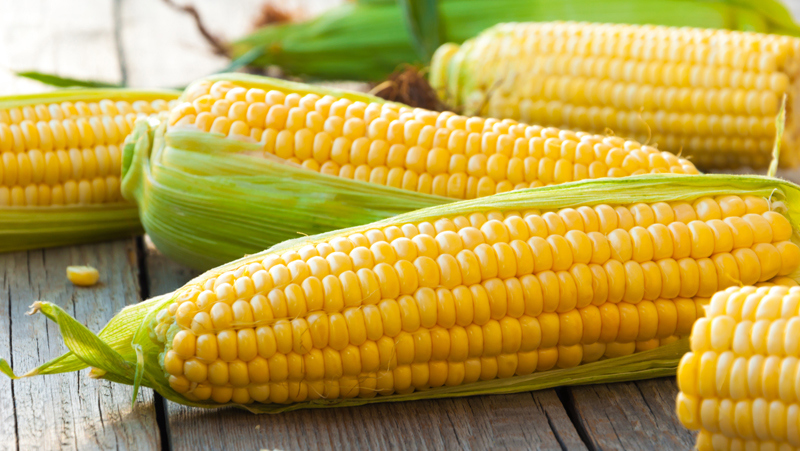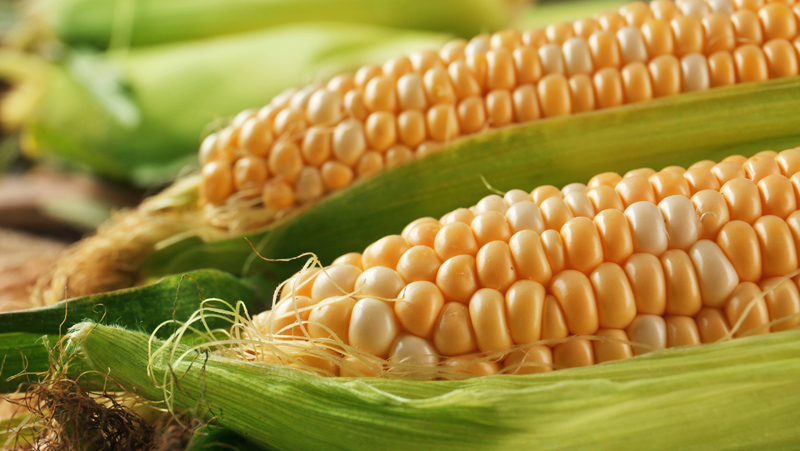




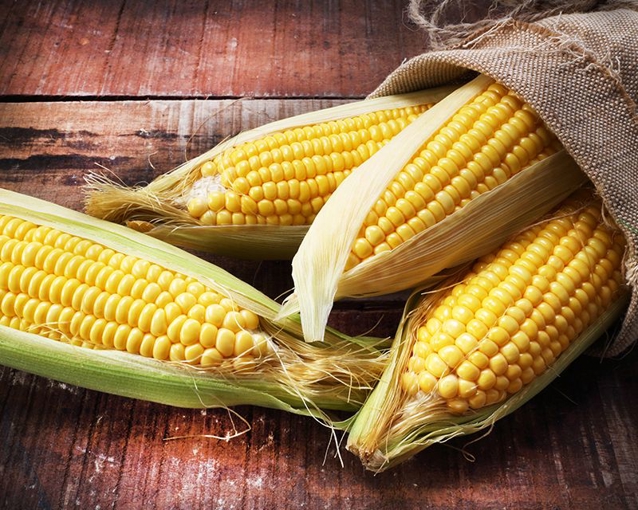
Fresh home-grown sweetcorn tastes sensational. It’s freshness that makes the difference! As soon as a corn cob is harvested, its natural enzymes begin transforming its sugar content into bland-tasting starch. Just-picked corn still has its full complement of tasty sugars, so it’s always going to taste sweeter than shop-bought corn. Aligned with better flavour, truly fresh sweetcorn has a strong floral aroma, that adds an extra layer of delight to the home-grown experience. In addition, super-fresh cobs have plump, crisp kernels, with the moisture content at a perfect level to ‘pop’ with every bite.


How to Grow Corn in a Garden

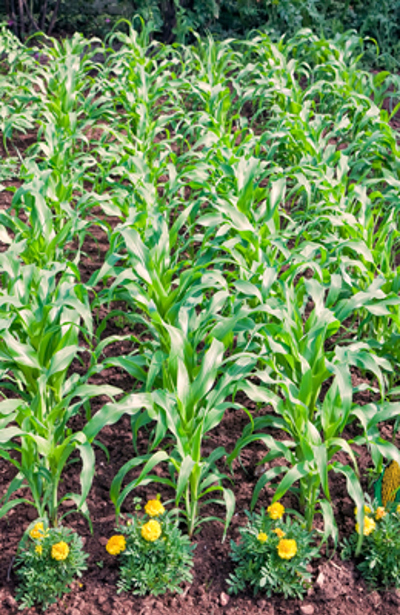
  1. Choose a sunny spot in the garden. Ensure it’s a generous area, so you can grow a block of corn, rather than plant long rows; this works much better for pollination and corn production (check out the growing tips for more info).
  2. Enrich the soil by digging in Yates Thrive Natural Blood & Bone before sowing.
  3. Corn is a heat loving plant. Corn seeds are fussy about soil temperature; they won’t germinate until the soil is warm. The practical minimum soil temperature for germination is around 12°C, but results will be patchy. If you wait until soil temperature has reached a sustained 16°C, you’ll get a much better germination rate and faster growth.
  4. Even if the soil is warm, check the weather forecast before you sow, because a cold, wet weather event soon after sowing can suppress germination and increase the failure rate.
  1. Because corn seed can be temperamental, sow two seeds into each hole to guard against gaps in your planting. When plants have reached about 15cm height, thin out the weaker plant.
  2. Space the sowing holes 30-40cm apart. Sow seeds 2.5cm deep. Water in well, then wait until seedlings to appear before watering again.
  3. Corn is a hungry crop, so feed seedlings weekly with Yates Thrive Natural Fish Seaweed+ Plant Food.
  4. Corn needs plentiful water during hot dry weather; give it a deep soak once a week.
  5. As the seedlings grow, mulch around the base of the plants to retain soil moisture, using organic mulch, like pea or lucerne straw.

How to Grow Corn in a Pot

  1. Choose pots at least 30cm wide and deep. Position pots in a sunny spot and protect them from strong winds.
  2. Fill pots with quality potting mix, like  Yates Premium Potting Mix.
  3. Sow 2 seeds per pot, cover them to 2.5cm depth and water in well.  
  4. Feed seedlings weekly with Yates Thrive Natural Fish & Seaweed+ Plant Food.

Sweetcorn Growing Tips

  • Keep on succession sowing until mid-summer to continue the harvest into autumn. In warmer regions, corn generally takes about 75-100 days to mature. It takes longer in cooler areas, plan for 90-120 days until harvest.

  • Corn pollen is spread by wind, so it’s best to grow plants in blocks or a grid pattern, rather than long, skinny or single rows. Clumped plantings are more efficient at catching pollen before it blows away.

  • Block planting corn also reduces the risk of rogue pollen from popcorn or maize affecting the flavour and texture of your sweetcorn (they cross-pollinate easily). Sweetcorn in the centre of a block is shielded from wind-blown pollen, so it retains its sweetness. If you want to taste the true character of a corn variety, it’s best to stick with a single variety each season.

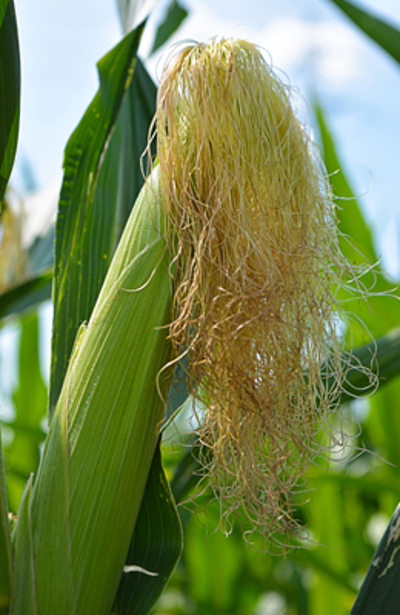
  • Pollen is transferred between tassels (the branching stalks at the top of the plant) and silks (the tufty-looking strands that protrude from the top of the cob). Each individual kernel in a corn cob only forms if it’s been pollinated; this is why you’ll sometimes see ‘gappy’ missing kernels in a cob.
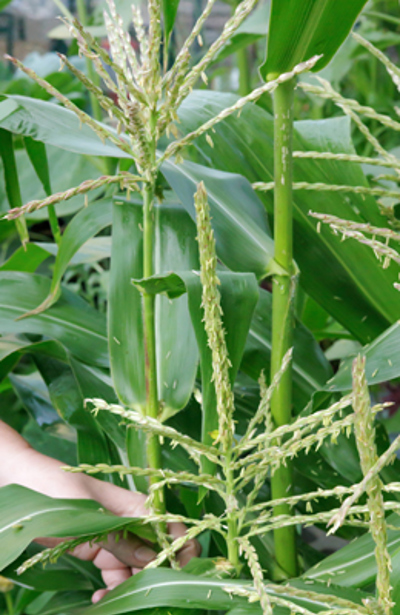
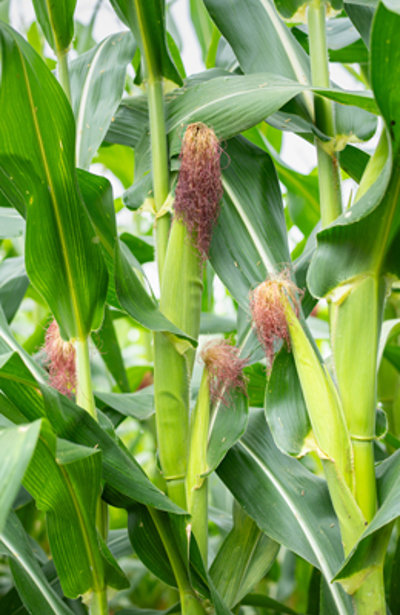
  • To prevent gappy cobs, give your individual plants a gentle shake when the tassels begin producing pollen: the pollen drifts down onto the neighbouring silks and fertilises them. Choose a dry morning for this job. For the perfect timing, wait until the tassels have opened out and have small pollen-containing sacs (anthers) hanging off them. You may see a fine dusting of yellow pollen descending, along with empty anthers that have dropped off the tassels.

  • Corn will typically produce a main stalk with two side shoots, although some traditional varieties can produce more side shoots. There’s no need to remove the additional side shoots, as it won’t really affect the production capacity of the plant; if you water and fertilise it during growth, corn will reward you with one large cob per plant, now and then with a second, smaller cob. If you have lots of corn-lovers to feed, make sure you grow enough plants to go around!

  • Corn is ready to harvest when the silks lose their sheen, become brown and shrivelled and the fluid inside the kernels is milky. If it’s still clear, the corn isn’t ready.

  • Eat corn cobs as soon as they’re picked! They don’t store well, so enjoy them at peak sweetness.


Yates Varieties

Sweet Corn 'Honeysweet'

An early maturing variety of "Super Sweet" corn. Large, even cobs with very sweet golden kernels.

Sweet Corn 'Sun 'n' Snow'

Produces bi-coloured cobs with yellow and white kernels that combine superb flavour with rich, succulent super sweetness.


More Plants

Corn

Home-grown sweetcorn tastes sensational. It’s freshness that makes the difference! Kids won't eat their vegies? Try freshly-picked sweetcorn.

Onion

They may make you cry, but onions are worth the tears! They can impart such a sweet or savoury flavour to your dishes, depending on how they’re used.

Kamokamo

A heritage variety of squash, with a delicious nutty flavour. Kamokamo is an old favourite in Māori cuisine; generations of careful breeding have gifted it a unique Aotearoa flavour.

Kūmara

Here's how to grow kūmara in your garden, or in pots if you live in the cooler parts of the country.

Recommended Products

Yates Premium Potting Mix

A premium potting mix, ideal for all potted plants and shrubs, including ornamentals, fruit trees, vegies and herbs.