



Yates Nature's Way Organic Citrus, Vegie & Ornamental Spray
Unique organically certified pyrethrum and plant-based oil combination insecticide, with twin modes of action against garden pests.
Create a Yates account today!
Sign up to join the Yates Garden Club for monthly e-mails packed with seasonal inspiration, tips for success & exclusive promotions.
Plus if you’re a Garden Club member you can take part in the Yates Growing Community - a blog to share successes, get advice & win prizes in fun challenges along the way!

Enter the email address associated with your account, and we'll email you a new password.
Need a Quick Fix for Aphids?
Our go-to solution is Yates Nature's Way Vegie, Citrus & Ornamental Spray, a unique, BioGro-approved organic insecticide.
Tips for application:
Aphids have a well-earned reputation, as one of the most infuriating and destructive garden pests in NZ. Scroll down to read all about them, or press the green button to go straight to the fix!
Aphids are small, pear-shaped sap-sucking insects (about 2–4mm long), that swarm to feed on plants in huge numbers. You might notice 'mini-aphids' in amongst the herd; these are baby 'nymphs' (aphids can give birth to live young, which allows them to multiply very quickly).
Small colonies can increase rapidly in warm weather - large infestations can develop in a matter of days. Inspect your plants a couple of times a week as soon as the weather warms up, so you can respond quickly. It's easier to keep aphids in check while their numbers are still manageable.
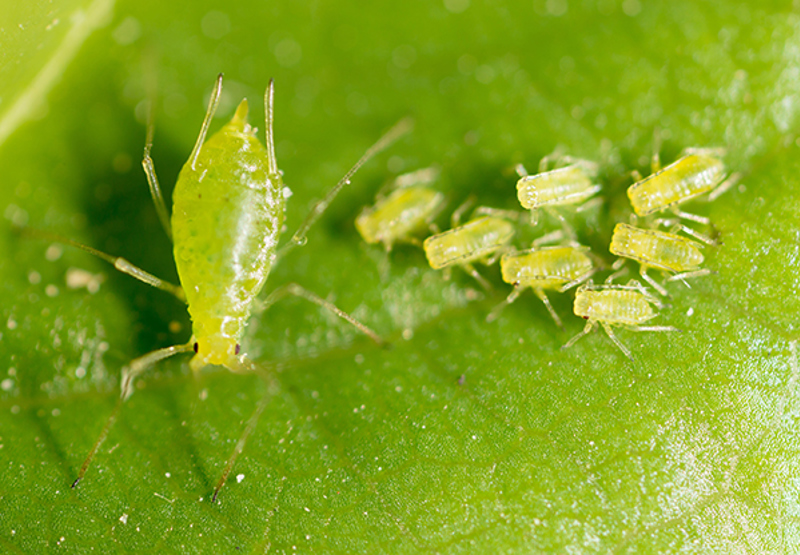
Aphids cause damage to plants directly by feeding on plant sap, or or by passing on harmful viruses (which they inject into your plants in their saliva). Aphid feeding severely weakens plants, so host plants also become less resistant to fungal and diseases.
There are 100+ different species of aphids in NZ. They all have different preferences in the plants they attack, but between them they feed on fruit trees, citrus, roses, camellias and a wide range of vegetables.
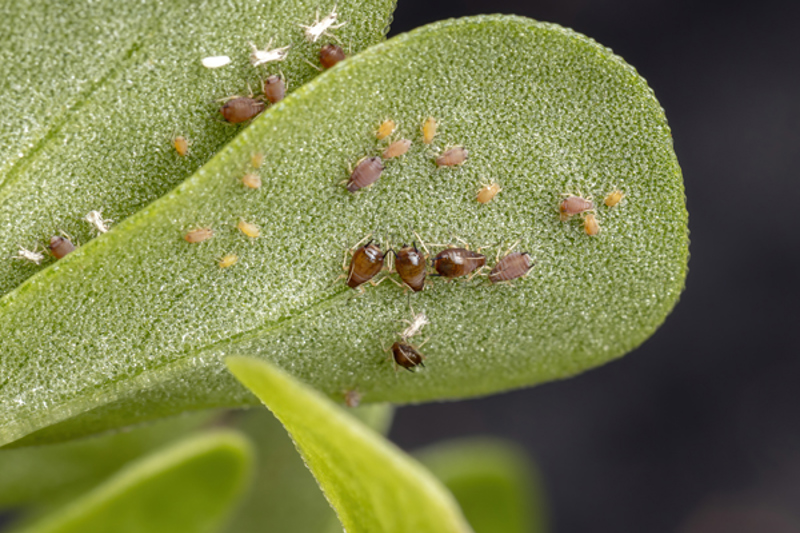
Black Citrus Aphids (Aphis citricidus) with pale shed skins visible.
Here are some of the most commonly encountered pest aphids, with their preferred host plants:
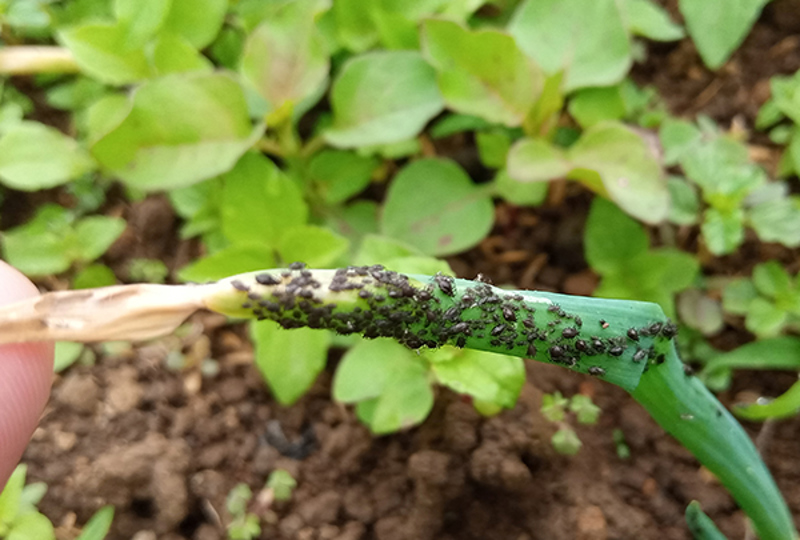
Onion Aphids (Neotoxoptera formosana)
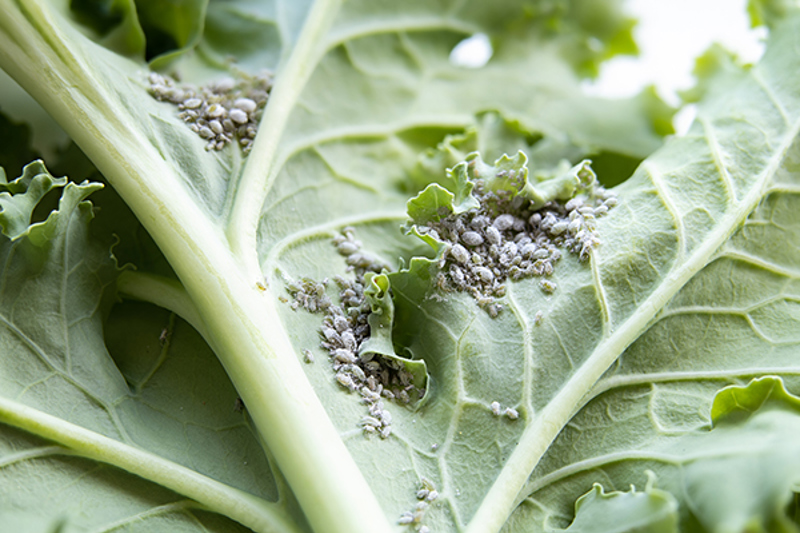
Cabbage Grey Aphids (Brevicoryne brassicae)
Many aphid species are capable of reproducing without any males around (this is called parthenogenesis). This explains why aphid colonies can increase in size so rapidly: during warm weather females mostly birth live young, without needing to mate. In warmer climates, they can do this all year round. In cooler climates, aphids overwinter by mating and laying eggs, that hatch out in spring.
Aphids typically pass through 4 nymph stages (instars) before the adult stage. As they moult, they leave behind their old skin casts (these will often be visible as white objects on leaves or buds). Aphid life cycles can be completed in 10-14 days in warm weather, and there can be more than 20 generations per year, depending on the climate and the species.
Adult aphids without wings are the norm when the colony isn’t overcrowded. When a colony needs to migrate from an over-wintering site, or from dried-out plants, or when conditions become too crowded, winged adult aphids develop, to allow them to move to new host plants.
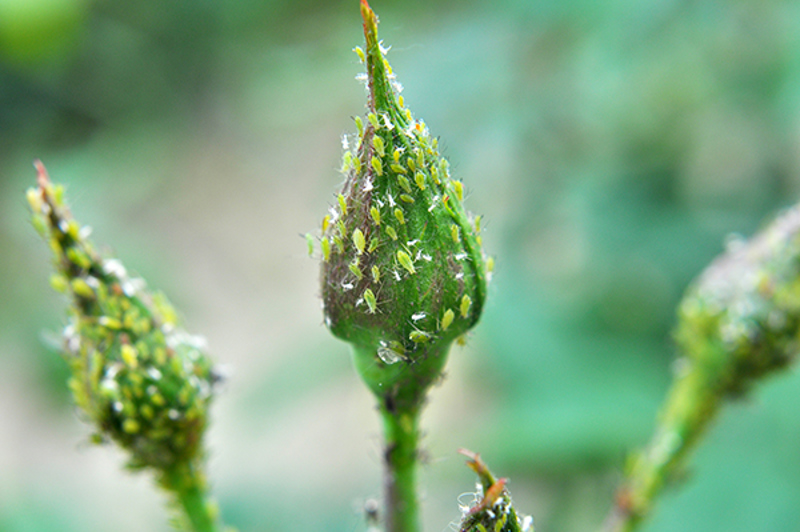
Rose Aphids (Macrosiphum rosae), showing dried cast-off skins
New growth is often covered in dense clusters of feeding aphids: they prefer to feed on fresh young shoots, where plant sugars are concentrated. Aphids can also be found on flower buds, or underneath older leaves. New leaves can be twisted and distorted. Buds may fail to open. You may notice that fruit fails to set, or experience early fruit drop.
Leaves are often covered in unsightly cast-off skins from the nymphs. These small, papery-looking translucent or white 'moults' are usually accompanied by shiny, sticky honeydew.
Honeydew is a combination of unused sugars and water, excreted by the aphids. Honeydew provides an ideal environment for sooty mould fungus to grow, so this black, sooty-looking substance covering leaves is a common symptom of an aphid infestation.
Likewise, honeydew is a valuable food source for ants, so lines of ants are another common symptom of an aphid infestation. Removing the aphids that create the honeydew will solve the sooty mould (and ant) problem.
Honeydew is also very attractive to ants, so they're often visible around aphid infestations. Fascinatingly, ants are known to protect aphids from predators, a little bit like farmers care for cows...so the ants can harvest the honeydew!
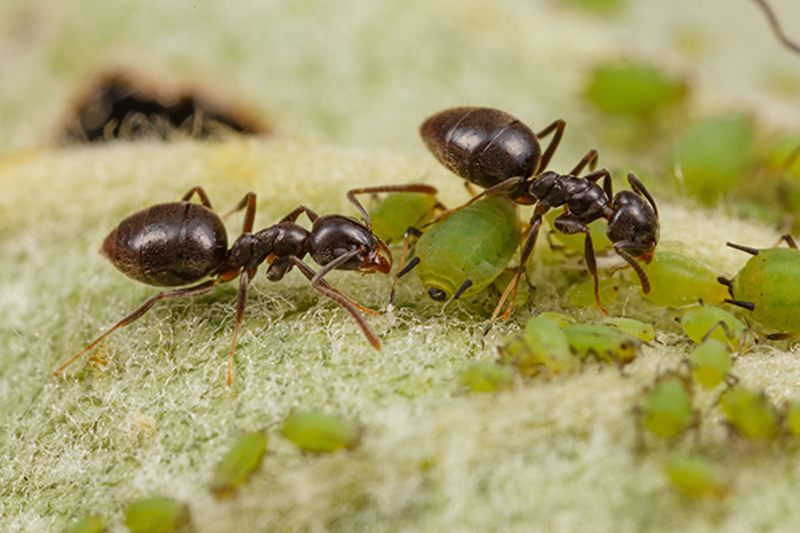
Ants 'farming' aphids for their sugary honeydew
Our go-to product for aphids is Yates Nature's Way Vegie, Citrus & Ornamental Spray, a clever pyrethrum and oil combination insecticide, with twin modes of action against insect pests. It's BioGro-approved as an organic input, with a 1-day withholding period between spraying and harvest.
For tomatoes, stonefruit and ornamentals, Yates Mavrik Insect & Mite Spray concentrate, or the handy ready-to-use Yates Mavrik Insect & Mite Gun are popular choices, because they're fast and effective.
For roses and ornamentals, Yates Super Shield Rose Spray is a great all-rounder that also controls diseases.
If you take care not to kill natural predators, like ladybirds, or parasitic wasps, they'll help you control aphids. Ladybird larvae (which look like tiny bird droppings) are voracious eaters of aphids. Parasitic wasps lay their eggs inside aphids, turning the unfortunate hosts into light brown, mummified empty shells, with exit holes in them. Both of these predators will reduce aphid numbers rapidly when they arrive. If you don't want to leave residue that might harm these beneficial insect predators, Yates Nature's Way Vegie Insect Spray Natrasoap is a great solution.
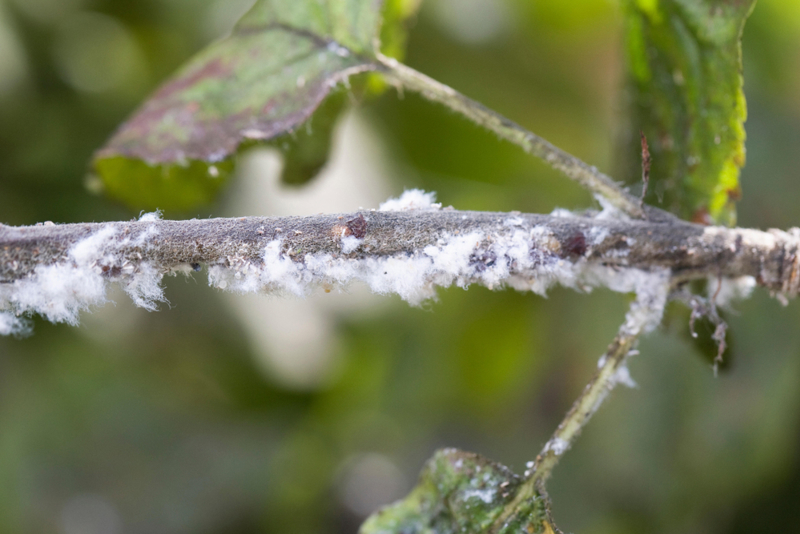
Woolly Apple Aphids (Eriosoma lanigerum)


Share
Share this article on social media